A painter’s way of moving through the island
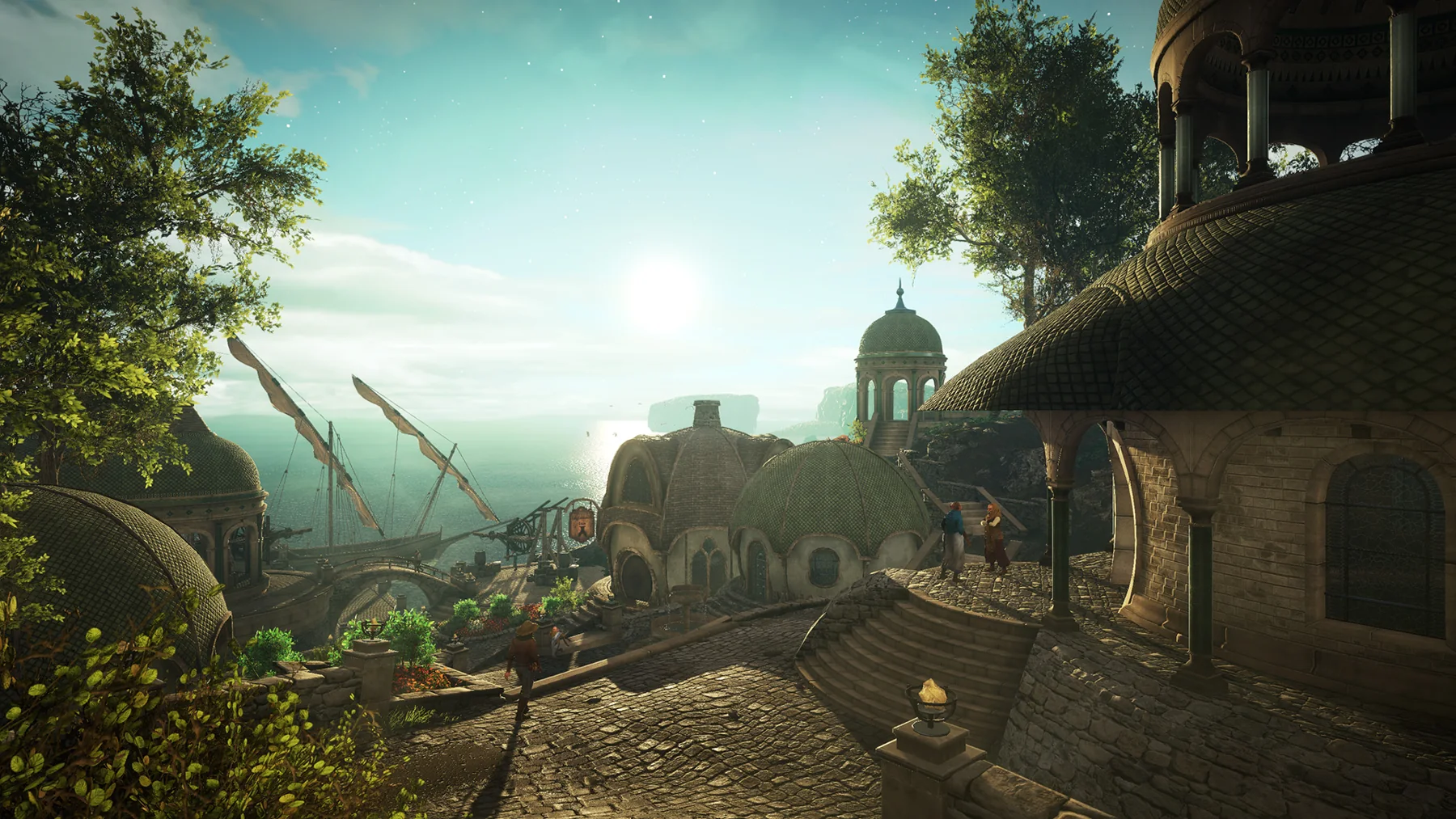
Eastshade makes the act of looking part of its exploration system. The player carries an easel and can compose paintings around the island, then offer finished works to inhabitants. Those exchanges can bring items or open discoveries, so a view is more than scenery: it can become a way into a conversation or a new possibility. Official Steam description
There is no combat loop driving the journey. Progress instead comes through observation, interaction, gathering materials, and finding schematics. Because materials and schematics can help overcome natural barriers, noticing what the landscape contains can matter as much as choosing where to go next. Official Steam description Official game features
What a commission asks you to notice
Painting quests can specify an object, a location, a color, a time of day, or a combination of these. That variety changes how the island is read: sometimes the task is to find a particular subject, while another request makes light or timing relevant. The easel therefore ties looking closely to concrete goals without turning every stop into a fight or a race. Danny Weinbaum: design postmortem
Creating a painting uses inspiration. The designer describes inspiration returning through new experiences, including tea, a new book, discovering a place, hot springs, a storyteller, and street music. These examples make attention itself a resource: pausing for something encountered along the way can replenish what painting spends. Danny Weinbaum: design postmortem
Conversations alter the map of possibility
Residents are not simply destinations for completed paintings. Conversations have discoverable topics and branching choices, and actions can affect later meetings and outcomes. The island’s small stories are interwoven, making the order and substance of encounters part of exploration rather than a layer separate from it. Official Steam description Official game features
A painting can also be an exchange for knowledge, not only an image or a means to gain an item. That gives the easel several roles: it records a view, answers a request, and can create a connection that reveals something else. Materials and schematics add a practical counterpart by opening routes past obstacles. Official game features
Choose a pace built around attention
The design once included hunger, coldness, and energy bars, but the creator says these conflicted with the intended slow pace and were removed from the core loop. The resulting structure asks the player to decide what to investigate, who to speak with, and when a new experience is worth taking in. Danny Weinbaum: design postmortem
Eastshade suits an outing measured by accumulated discoveries rather than combat encounters. A traveler can follow a painting request, explore for materials that may help with a barrier, or let a conversation lead toward a new topic. The island links these choices through painting, inspiration, and exchange, keeping observation central to both movement and progress. Official Steam description Danny Weinbaum: design postmortem Official game features
Sources & further reading
Sources, dates, or details to query? Read our editorial approach.