A lookout in Wyoming, 1989
Two Forks Fire Lookout is the anchor for Firewatch’s landscape. Henry has taken a summer job watching the Wyoming wilderness, with supervisor Delilah at the other end of a handheld radio. Campo Santo sets the story in 1989: the tower, the surrounding forest and that voice establish the shape of the job before its complications emerge. Developer source Developer source
The tower is a place to look out from, but the developer’s premise also sends Henry down into the trees. That change of height matters to the design. A view across forest gives way to paths, junctions and objects close enough to inspect; the person on the radio becomes a companion to movement rather than a distant introduction. Developer source
The map and compass are actual tools
The game provides a Two Forks Regional Map and separate actions for reading the map and using the compass. These are tools to consult while navigating, rather than decorative inventory items. The interface also includes a map-location-display setting, so descriptions that insist the game can never show your position are too absolute. Developer source
Traversal is contextual. The interface includes attaching a rope to a hook and rappelling, not an unrestricted ability to climb every rock face. A visible route and an available action have to agree. That gives the forest a particular structure: a cliff is sometimes an edge to work around, sometimes a place with a specific way down. Developer source
Looking gives the radio something to say
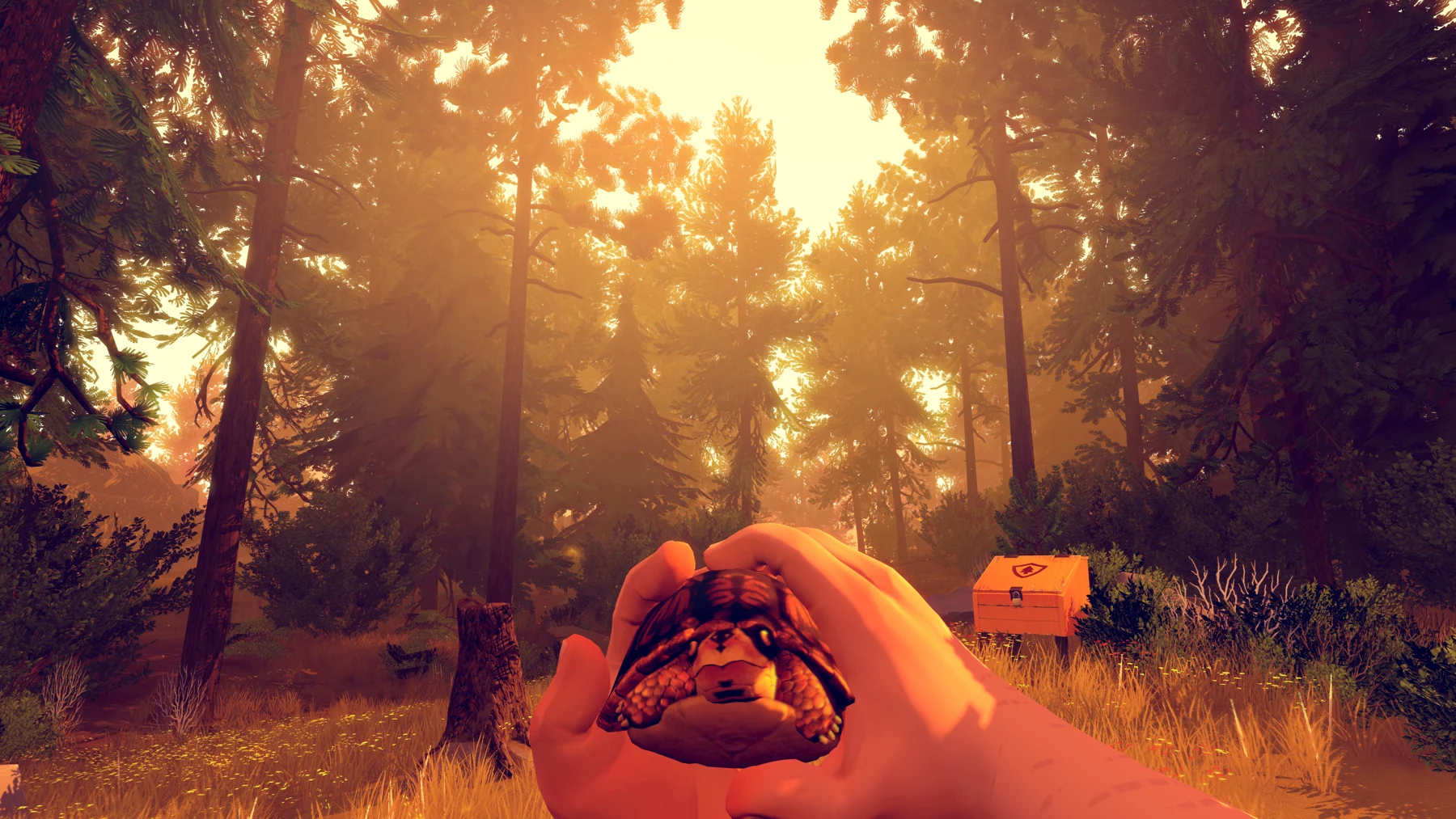
Radio prompts can report the subject currently being examined or discuss an object Henry is holding. Reply selection then makes a conversation out of that observation. The important connection is concrete: what occupies the screen can become what Henry and Delilah talk about. Campo Santo says interpersonal choices shape their relationship. Developer source Developer source
This is why Firewatch belongs beside stories about landscapes. The same stretch of forest has a direction on the map, a physical obstacle on the path and a meaning in a conversation. The game layers those readings without needing a vast catalogue of equipment.
A photograph can survive the walk
A disposable camera adds another specific way to record a view. The game’s interface includes viewing the player’s photographs in the credits. That is a more direct connection between looking and remembering than an external checklist: the framed view becomes part of the game’s own record. This introduction leaves the story discoveries beyond the tower and its tools unexplained. Developer source
Sources & further reading
Sources, dates, or details to query? Read our editorial approach.