A search inside a survival simulation
Anthropologist Jake Higgins is stranded in the Amazon while searching for his missing wife, Mia. That premise gives the landscape a human direction, but the game’s exploration is organized around immediate needs: gathering materials, crafting, hunting, and managing health. Endless Mode shifts the emphasis toward survival without the story’s search. Official Steam description
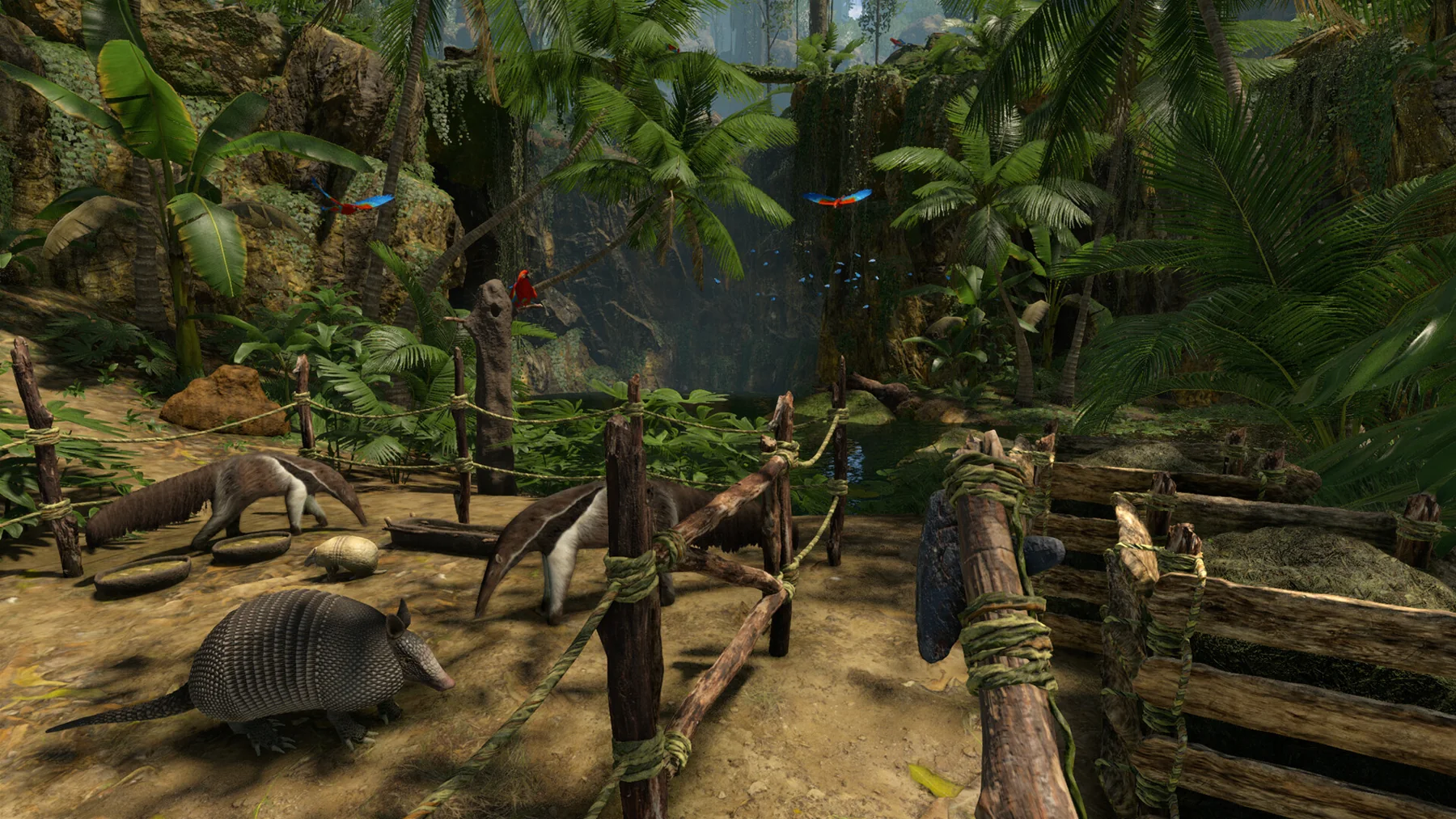
The environment is presented as a living rainforest of mammals, reptiles, birds, and insects. Player actions affect that environment, while food and water remain only part of the pressure. Diseases, injuries, and psychological condition also shape how long an expedition can continue. Official game website
Inspecting the body, not just the landscape
A distinctive choice is the game’s self-diagnosis system: the player inspects physical condition to tend wounds. This turns attention inward during exploration. A supply decision or injury can matter alongside the next landmark, and mental health adds another constraint to the survival loop. These are game systems, not wilderness medical advice. Official Steam description
Because food and water do not replace health management, the rainforest is not simply a route between resource caches. Sourcing materials, making fire, setting camps, growing plants, and hunting all sit within a broader task of keeping the character functional. Official game website
Building a place to return to
Shelter construction gives resource gathering a longer horizon. Wood, bamboo, stone, mud, and rope can become structures that expand across multiple levels or rise into treetop bases. A camp can therefore develop from a basic resting point into a more elaborate foothold in the forest. Official Steam description
The same materials belong to a wider toolkit that includes tools and weapons, so collecting them supports both immediate survival and planned construction. The game’s environment responds to player actions, making resource use part of how the simulated ecosystem is encountered. Official game website
Animals as resources and relationships
Capybaras, tapirs, peccaries, armadillos, and anteaters give the animal systems recognizable variety. Feeding and caring for animals builds trust, adding a relationship to the familiar cycles of hunting and gathering. Honey, feathers, eggs, and insects also serve as usable resources. Official Steam description
The result is an exploration game in which attention moves repeatedly between outward discovery and practical upkeep. The forest offers materials, wildlife, and places for camps, while injuries, disease, and mental pressure make each activity part of a connected survival problem. Official game website
Sources & further reading
Sources, dates, or details to query? Read our editorial approach.