A journey that changes scale
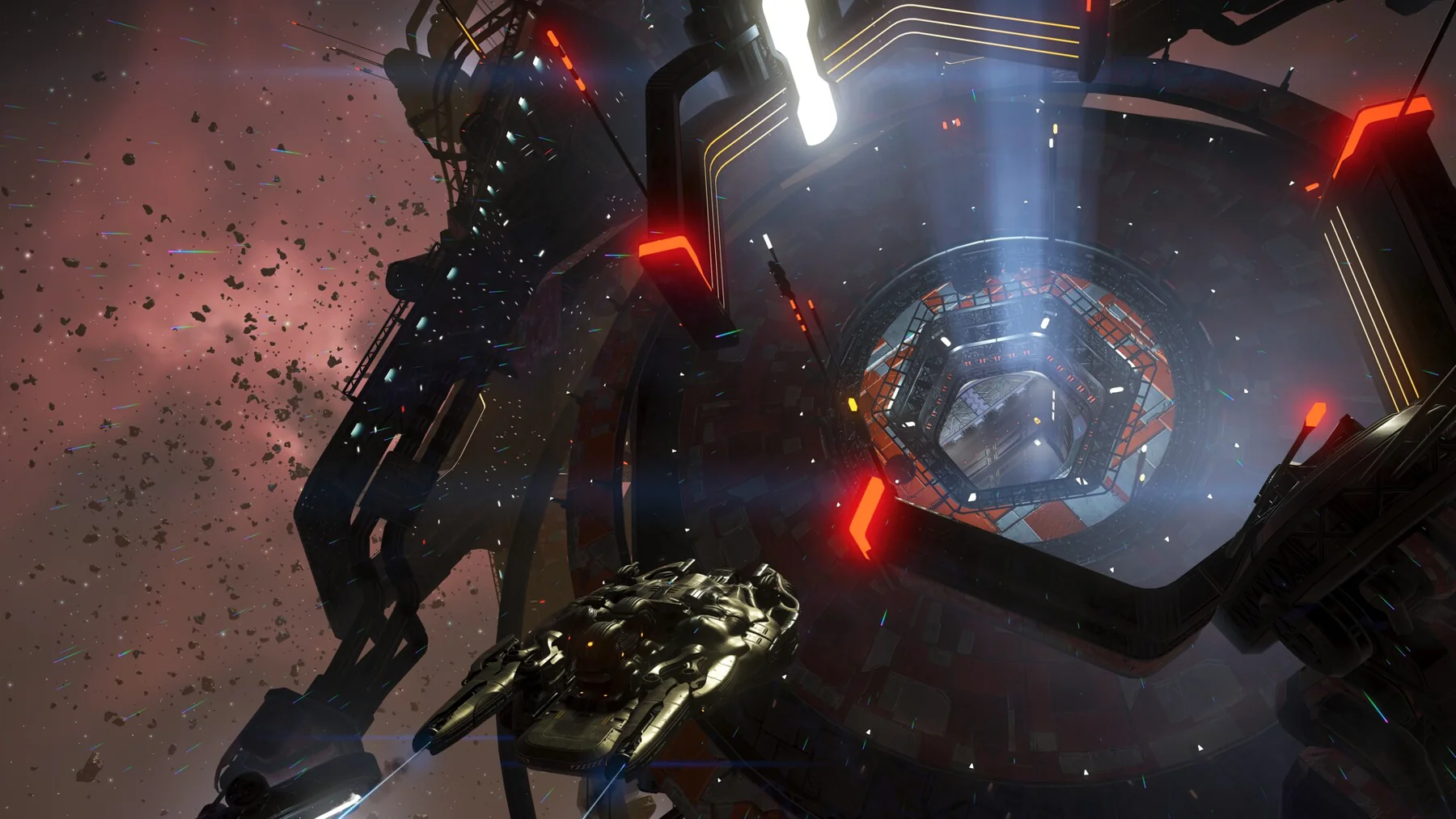
No Man’s Sky frames exploration as movement between deep space and planetary surfaces in a procedurally generated galaxy of planets, creatures, and hostile environments. That scale is also a choice of activity: a player can concentrate on exploration, trade, or combat rather than follow one fixed profession. Ship upgrades can emphasize travel range, cargo, or combat, while suit upgrades help with toxic conditions. Official Steam description
The same setting includes trade convoys, competing factions, and pirates, so crossing a system is not just a scenic transition. A route through space can involve commerce or conflict, while the surface below offers another kind of investigation. Discoveries may be shared on a galaxy map, giving a planet’s significance a social dimension beyond an individual landing. Official Steam description
Read the ground before committing
Planetary environments vary sharply. Hello Games describes deep ocean floors with corals and aquatic life, dense jungle vegetation, and gas giants where gravity and pressure become defining conditions. Toxic spores, radioactive fallout, eruptions, and geysers add local hazards on planetary surfaces; the useful preparation depends on which environment is being approached. Hello Games: planetary environments and tools
Tools give those contrasts practical consequences. A Pressure Membrane supports exploration in ultra-deep water, while a Colossus Exocraft can carry a three-slot mineral-processing rig. The first supports a specific kind of descent; the second makes a ground vehicle part of resource work. These details make equipment a way of choosing what sort of landscape to enter and how to operate there. Hello Games: planetary environments and tools
Places built to stay
A landing can become a more lasting point in the planetary network. Players can construct small outposts or larger colonies, farm resources, and hire helpers. A freighter can serve as a mobile base, while Exocraft offer another way to travel over a planet. These constructed places add deliberate landmarks to a world whose natural terrain is procedurally generated. Official game website
Some destinations carry a different kind of history. Relic Worlds contain ancient ruins, architectural blueprints, and polished stone. The description establishes these as specific features to investigate, not as a guaranteed sequence of discoveries. Their contrast with a newly built outpost gives planetary exploration two useful directions: reading traces already present, or making a place of your own. Hello Games: planetary environments and tools
The social geography
The Space Anomaly is a summonable social hub where travellers can meet and take missions together. Players can also visit one another’s bases, and the official site links to a Galactic Atlas and community Galactic Hubs. These are shared or constructed destinations, distinct from the procedural planets themselves. Official game website
That distinction makes the game’s map feel layered: a hazardous ocean or jungle is encountered as an environment, while a colony, freighter, or social hub is a place organized around activity. For players choosing an exploration game, the appeal lies in switching among those scales—crossing space, adapting to a local surface, and deciding whether a discovered world remains a brief stop or becomes a point of return. Official Steam description Official game website Hello Games: planetary environments and tools
Sources & further reading
Sources, dates, or details to query? Read our editorial approach.