From the park toward the coast
The 1871 Trail takes you beyond Puʻuhonua and the Royal Grounds to the remains of Kiʻilae Village. Its two-mile round-trip route traces the South Kona coast, where the ancient path once connected coastal villages. In the late 1800s it was expanded for horse-drawn carriages, layering a later travel story onto a route that predates European arrival in Hawaiʻi. NPS
Find the trailhead on the gravel Coastal Access Road, south of the main parking lot and mauka of the Visitor Center. Or park at the picnic area and follow the Coastal Trail to its junction with the 1871 Trail. The two approaches give you a choice about where to begin, but both lead into the same coastal outing. NPS
A shoreline of changing ground
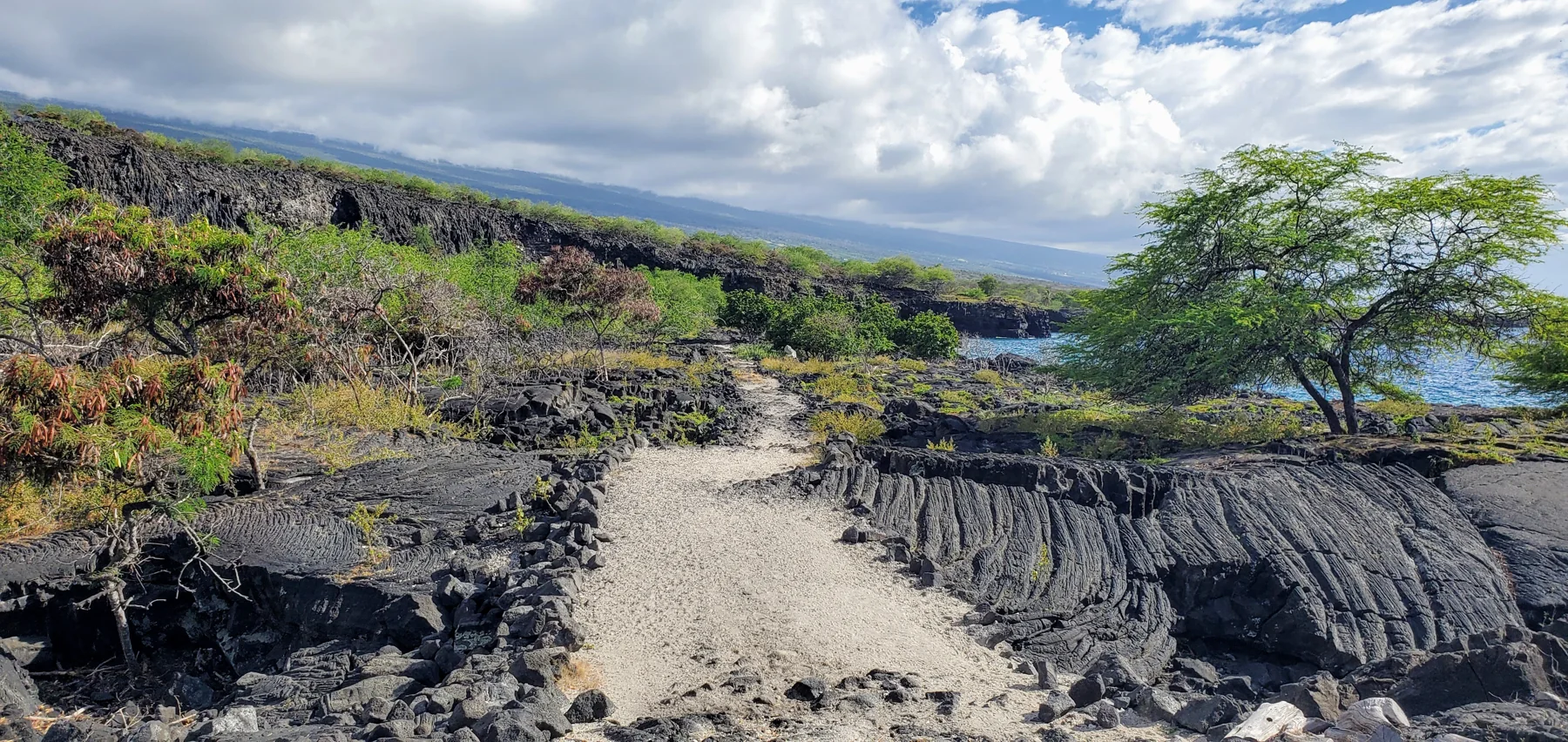
The route passes ancient and historic sites along coastal cliffs, with Keanaeʻe cliffs and the Alahaka Ramp among its named landmarks. The trail is relatively flat overall, but follows the coastline’s rises and dips. Expect coarse coral sand and uneven, sometimes loose lava rock; beyond the ramp, parts of the route narrow to a dirt path. NPS
Alahaka Ramp is the steepest stretch: a 20% grade for about 150 feet. That brief climb stands out against the trail’s otherwise undulating profile, so sturdy footwear matters on the loose and irregular surface. The coastal setting rewards a measured pace, especially where the path becomes narrow. NPS
Reading the route
The destination is the remains of Kiʻilae Village, reached by the same coastal corridor that frames the walk. A brochure describing the lettered stops is available at the Visitor Center, open daily from 8:30 am to 4:30 pm, or as a Kiʻilae Village and 1871 Trail PDF. It gives the ancient and historic sites context as you move between them. NPS
The 1871 Trail is one section of the Ala Kahakai National Historic Trail, whose corridor follows the island’s western and southern edges and continues into Puna. Here, the path’s practical scale is more intimate: a walk linking the coast, ramp, cliffs, and village remains. NPS
Sun, water, and access choices
There is little shade, so bring water and reef-friendly sun protection; the park recommends caution for people sensitive to sun and heat-related illness. The trail is listed for Winter, Spring, Summer, and Fall. No season-specific route change is described, but exposure remains part of the outing throughout the year. NPS
If bringing a pet, park rules require a six-foot leash and voice control, and owners must remove waste. Feral goats are prevalent, so consider whether a pet sensitive to livestock will be comfortable. A trash can is available at the trailhead. NPS
Sources & further reading
Sources, dates, or details to query? Read our editorial approach.