Begin on the water, continue uphill
Birdwatching can begin on the ferry: murres, grebes, and ducks may be visible in the water, with Brown Pelicans overhead. At the dock, listen for Western Gulls and Pigeon Guillemots. A Bird Board at the dock displays official counts, and binoculars or a camera can help observe birds from a respectful distance. NPS
From the dock, the Cell House sits at the top of the island, about 1/4 (0.4 km) of a mile away with an elevation change of 130 feet (40 meters). Most roadways and walking routes have extreme slopes. An accessible tram serves visitors with mobility impairments traveling to the Cell House; the dock also has an accessible restroom. NPS
Roads, gardens, and the Parade Ground
Along the switchbacks and roads, Western Gulls are visible throughout the island, and these routes offer views of adults incubating eggs and tending chicks. Keep at least 5 feet from nests; if an adult gull squawks, step back. Parts of the island close to the public from February to September to protect nesting birds, so the accessible route and open areas shape what can be seen. NPS
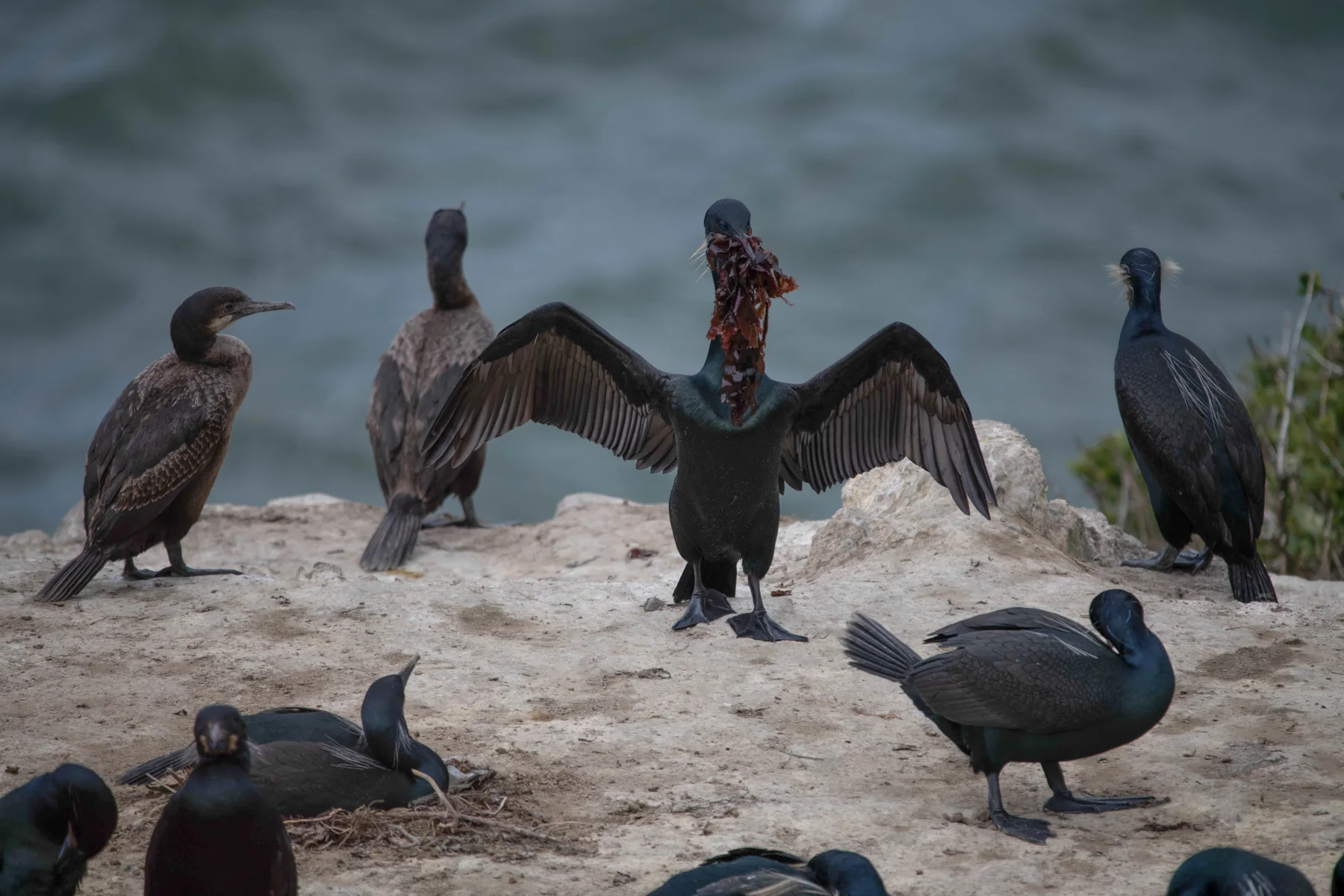
The volunteer-maintained Gardens add a different habitat. In the Rose Garden, a Eucalyptus tree provides a nesting place for Great Blue Herons, while flowers draw Anna’s Hummingbirds. Migratory warblers may pass through in fall and spring. Turning around the Lighthouse brings the Parade Ground into view: Western Gulls nest on its flat areas, while Brandt’s Cormorants use the Rubble Piles. NPS
West Road and the high points
West Road looks toward shrubland where Snowy Egrets and Black-crowned Night Herons nest. Their dense cover can make sound an easier clue than sight. At Barker Beach overlook, flat ground and cliffs hold a large Brandt’s Cormorant colony, which can number upwards of 10,000 birds at the height of nesting season. NPS
Look upward at the Lighthouse, Watertower, and Cell House for Peregrine Falcons. Their nest is not visible from island roads, but high perches may reveal the birds. In May and June, adults and young practice flight; the young remain on Alcatraz for nearly a month while learning to fly. NPS
Time the island’s bird calendar
Birds are most active and breeding or fledging between February and September. Fall migrants are active August–November, while wintering species are present September–March. The dock-to-Cell House climb and steep walking routes make this a demanding choice for visitors who prefer level paths; the accessible tram provides an alternative for reaching the Cell House, while routes beyond it still include slopes and stairs. NPS
Sources & further reading
Sources, dates, or details to query? Read our editorial approach.