Across the backdune wilderness
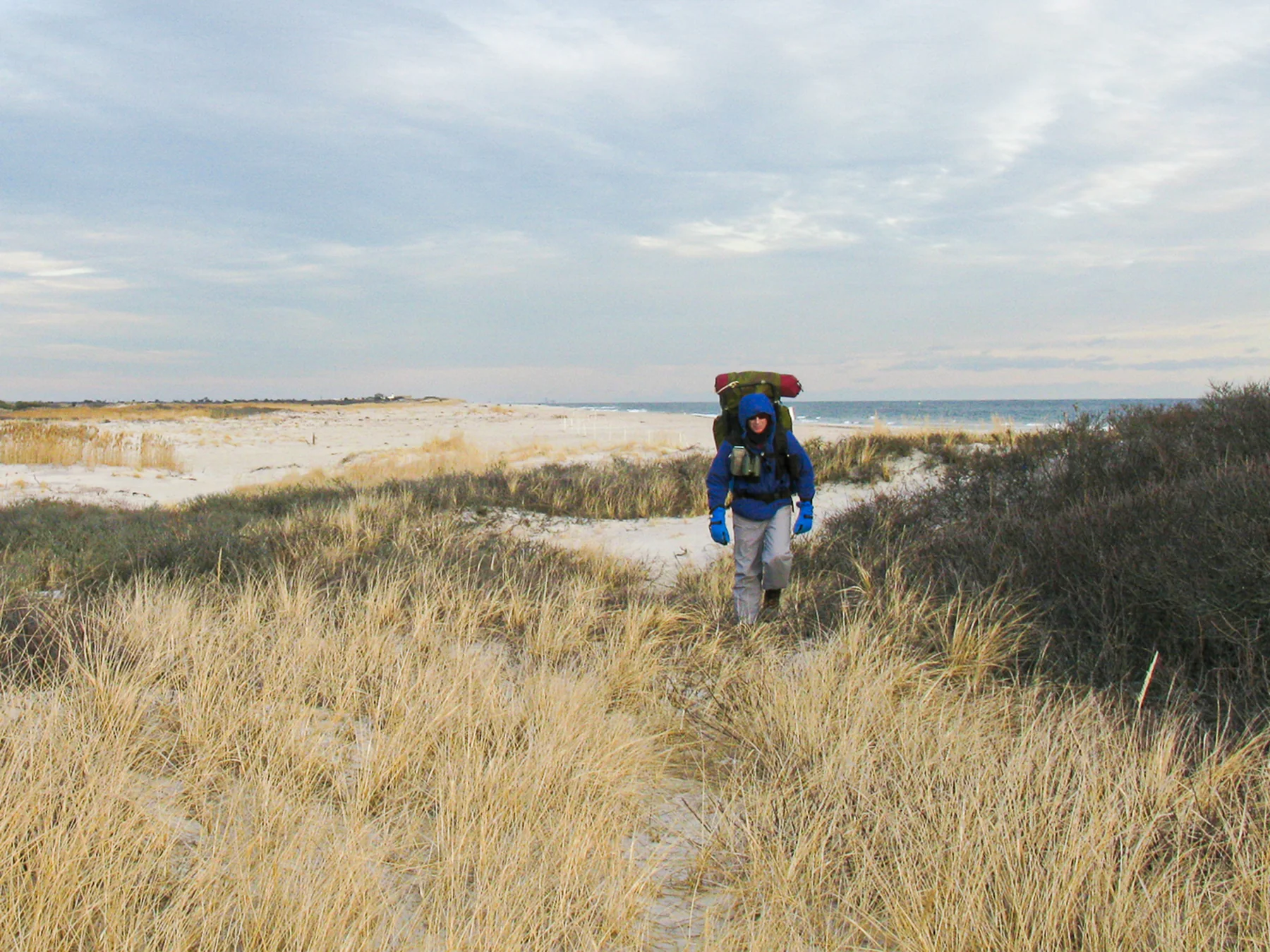
The seven-mile Burma Trail spans the Otis Pike Fire Island High Dune Wilderness Area from Watch Hill to Smith Point. It follows part of the old Burma Road, once an off-road vehicle route before wilderness designation in 1980. Much of that trace has disappeared beneath dunes or vegetation, while some stretches remain clear. NPS
A landscape with traces of use
Concrete pads once used by the US Life Saving Service and Coast Guard, bricks from summer bungalows, and shipwreck remnants may appear along the route or shore. These fragments complicate any simple idea of wilderness as untouched: the landscape has reclaimed evidence of human use. The trail also serves hikers, photographers, birders, campers, anglers, and hunters. NPS
Typical access points are the Wilderness Visitor Center or Watch Hill. In cooler months, western-end hikers can take a ferry and walk an additional mile from Davis Park; ferry service is limited between October and May. NPS
Expect sand, brush, and water
The trail is fine sand and dirt, generally flat, with sections ascending and descending dunes as high as 20 feet. Most of it is about 3 feet wide. Vegetation can overgrow the path, sand can bury it, and storms can flood or overwrite sections; this wilderness trail is not maintained for accessibility. Hikers should be prepared for changing conditions and have basic backcountry navigation skills. NPS
Stay on established paths or deer paths to protect dunes and vegetation. If a section is impassable, the NPS advises reaching the ocean side through a low point in the dunes and continuing along the beach. NPS
Choose the season and carry water
Cooler months are generally more comfortable on the backdune trail because adult mosquitoes are absent. Mosquitoes are prevalent north of the primary dune from late spring until late fall, so the adjacent ocean beach may be more comfortable in warmer months. Ticks can occur year-round, though they are less active in winter; inspect yourself after hiking. NPS
There is little shade and no drinking water between the Wilderness Visitor Center and Watch Hill. Check weather and tides: storms and seasonal tides can push ocean water to the dune line, causing overwashes and hazardous sandy washes. Duck hunting may be encountered north of the trail during fall and winter. NPS
Sources & further reading
Sources, dates, or details to query? Read our editorial approach.