A road remade by winter
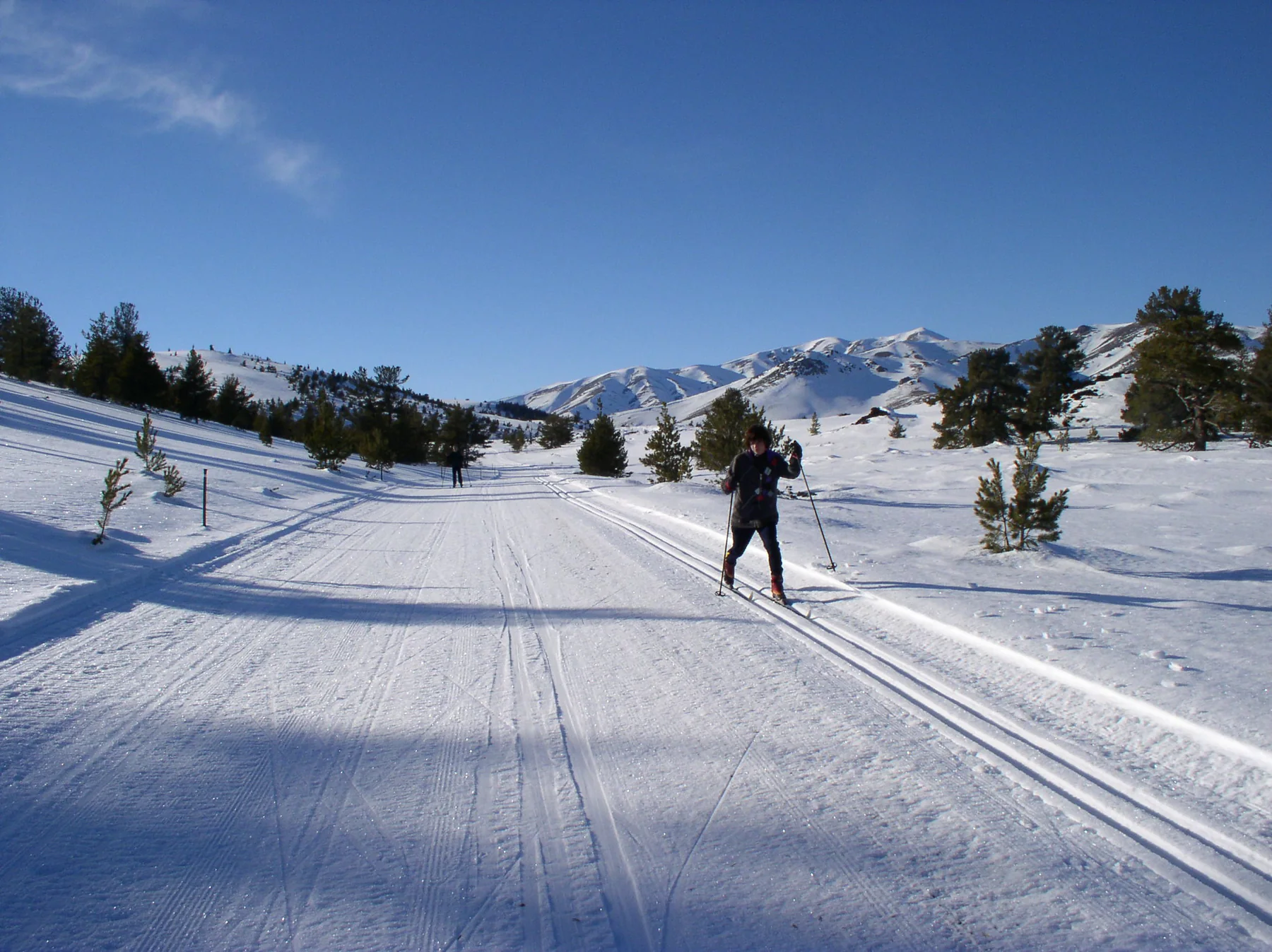
At Craters of the Moon, winter turns the Loop Road into a route for human-powered travel. The road typically closes to motor vehicles between mid-November and mid-April, while snow settles over the lava. Grooming for cross-country skiing and snowshoeing usually begins by January and runs from January to March, depending on conditions and staffing. NPS
The change is more than a shift in transport: snow lies over a volcanic landscape of black lava, and animal tracks can show up clearly against the white. The park’s winter season may begin as early as November and last through March. Snow is not cleared from the Loop Road, so visitors travel by ski or snowshoe beyond the visitor center parking lot. NPS
Choose the ski track or Snowshoe Trail
The groomed ski portion of the Loop Road is about seven miles roundtrip, mostly level or gently rolling, with one steep hill on the southwest side of Inferno Cone. Novice skiers can ride the loop clockwise to avoid descending that hill. The road is groomed weekly as conditions and staffing allow, so the route’s surface depends on winter operations. NPS
Snowshoers have a separate marked Snowshoe Trail, which is moderately strenuous and includes several steep inclines. On the Loop Road, snowshoers should stay to the far right of the groomed route and return on the far left; ski tracks are for skiers. Hikers are limited to the Loop Road, and the Snowshoe Trail is reserved for snowshoe travel. NPS
Landmarks and changing footing
Inferno Cone gives the ski route its main steep section, while cinder cones along the Loop Drive offer open slopes. Leaving the groomed track means crossing snow that can hide uneven lava, cracks, holes, and sharp rocks. The marked route is therefore the more predictable choice; off-track travel calls for caution and sound judgment about conditions and ability. NPS
Snowshoes are available to borrow at the visitor center during stated winter hours, with a ranger demonstration and basic safety briefing. Ranger-led weekend walks on the Snowshoe Trail are offered from late January through February; sign-up is required, and children must be eight years old or above. NPS
Plan for snow, ice, and closures
Winter conditions can change rapidly: temperatures may dip below 0°F, blizzards can occur in any winter month, and wind is common. Carry extra clothing, water, snacks, a first aid kit, and a park map, and check weather, highway conditions, and the park road’s current status before setting out. Roads, walkways, and parking areas may be icy or snow-covered. NPS
Before grooming begins and after it ends, there can be a short car-free period when the Loop Road is open to hiking or biking. Snow, ice, and water may still cover the road, and spring snow removal can cause temporary closures; parts of roads and trails, including caves, may remain snow- or ice-covered into May. NPS
Sources & further reading
Sources, dates, or details to query? Read our editorial approach.