A network with different gateways
Wrangell–St. Elias front-country hiking is spread across distinct areas rather than gathered around one trailhead. Copper Center has scenic trails, mostly outside the park, with views of the Wrangell Mountains. Kennecott offers several trails and the park’s strongest glacier-viewing options, while Nabesna Road has numerous day hikes that follow creeks, enter the mountains, and reach alpine meadows. NPS
Yakutat and the coastal area are different again: there are no park trails there, but nearby Tongass National Forest trails lead into temperate rainforest. This area is not connected by road to the Copper River Basin, so reaching it requires an air taxi or commercial flight. The access distinction matters when choosing a walk: the coastal forest trails belong to a separate travel plan. NPS
Know where the maintained trail ends
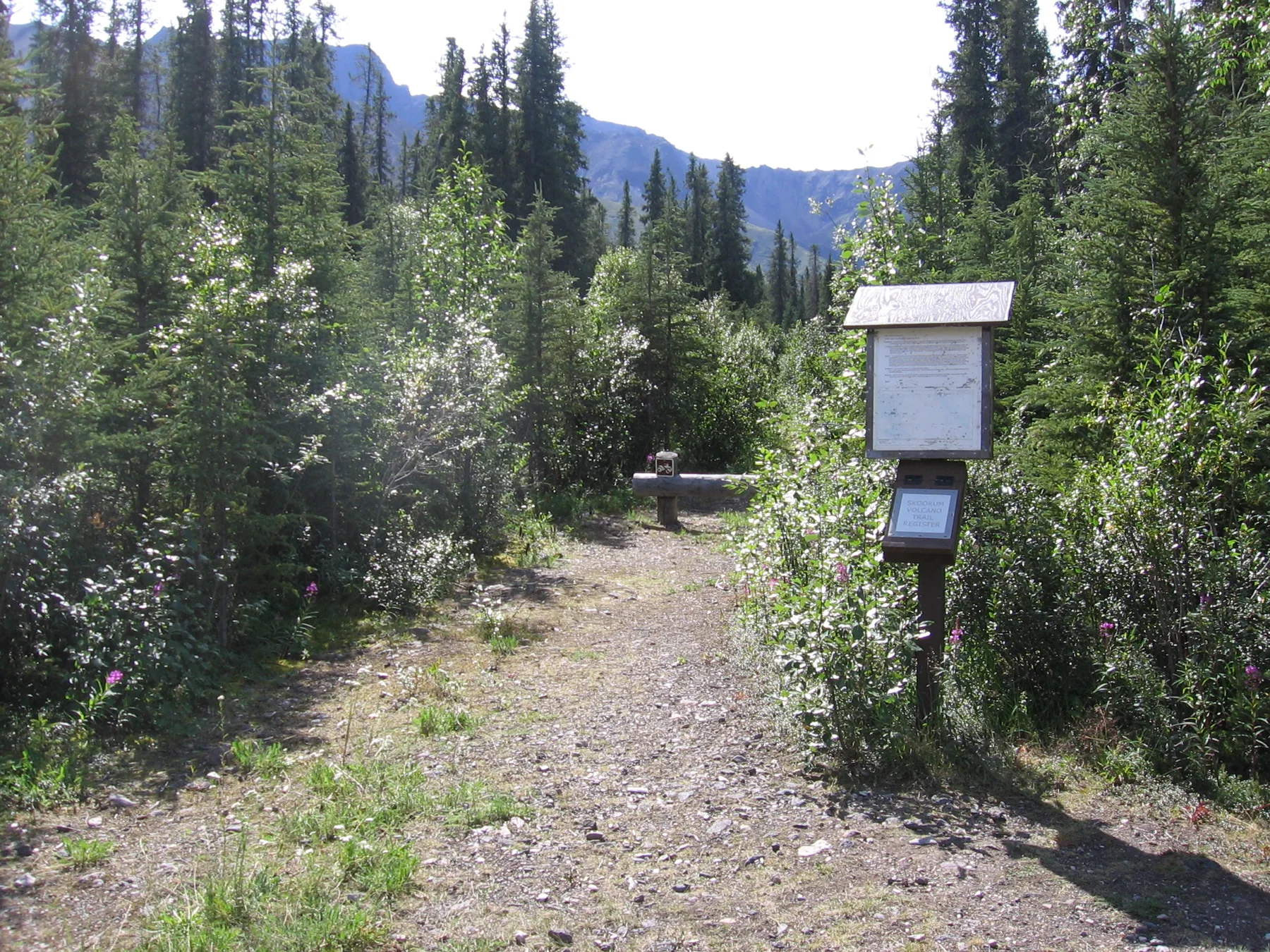
Most front-country trails are maintained for the first few miles, then become routes into backcountry. Route finding and navigation skills are highly recommended beyond that transition. A day hike can therefore change from a defined trail outing to remote travel; choose a turnaround point with that shift in mind rather than assuming maintenance continues indefinitely. NPS
The park’s landscapes vary with the gateway: glacier views around Kennecott, creek corridors and alpine meadows along Nabesna Road, and mountain outlooks near Copper Center. Hiking duration depends on distance and the hiker’s athletic capabilities, so the trail network supports different outing lengths without a single standard circuit or mileage. NPS
Surface, weather, and access
Most trail surfaces are earthen ground, gravel, mud, and sand, so wheelchairs are not recommended on them without assistance. At Copper Center, the paved Bluff Overlook trail is wheelchair accessible. It begins about 100 yards from the visitor center and parking area, with interpretive waysides and Wrangell Mountain views when weather permits. This is the clearest short, accessible option identified in the front country. NPS
Hiking is possible year-round, but the seasons bring substantial planning differences. Winter temperatures can reach 20 to 30 degrees below zero; spring, summer, and fall can bring heavy rain and flooding. River crossings can be dangerous, and the park advises turning back when in doubt. Weather and water levels can change which routes are sensible on the day. NPS
A remote park calls for preparation
No reservations are required for front-country hiking. For an overnight backcountry trip, the park recommends submitting a travel itinerary to rangers at the visitor center. Dogs are allowed on trails on leash and must remain under control; leashes are required at Kennecott Historic Landmark and around contact stations, including the visitor center and ranger stations. NPS
In Alaska, trapping is popular and legal from fall through spring, with seasons varying by location and species. Keeping a dog physically controlled helps reduce the risk of an animal encountering a trap or snare. The park’s front-country trails invite exploration across a vast area, but their defining practical feature is the point where maintained path gives way to backcountry judgment. NPS
Sources & further reading
Sources, dates, or details to query? Read our editorial approach.