Color in a desert mountain range
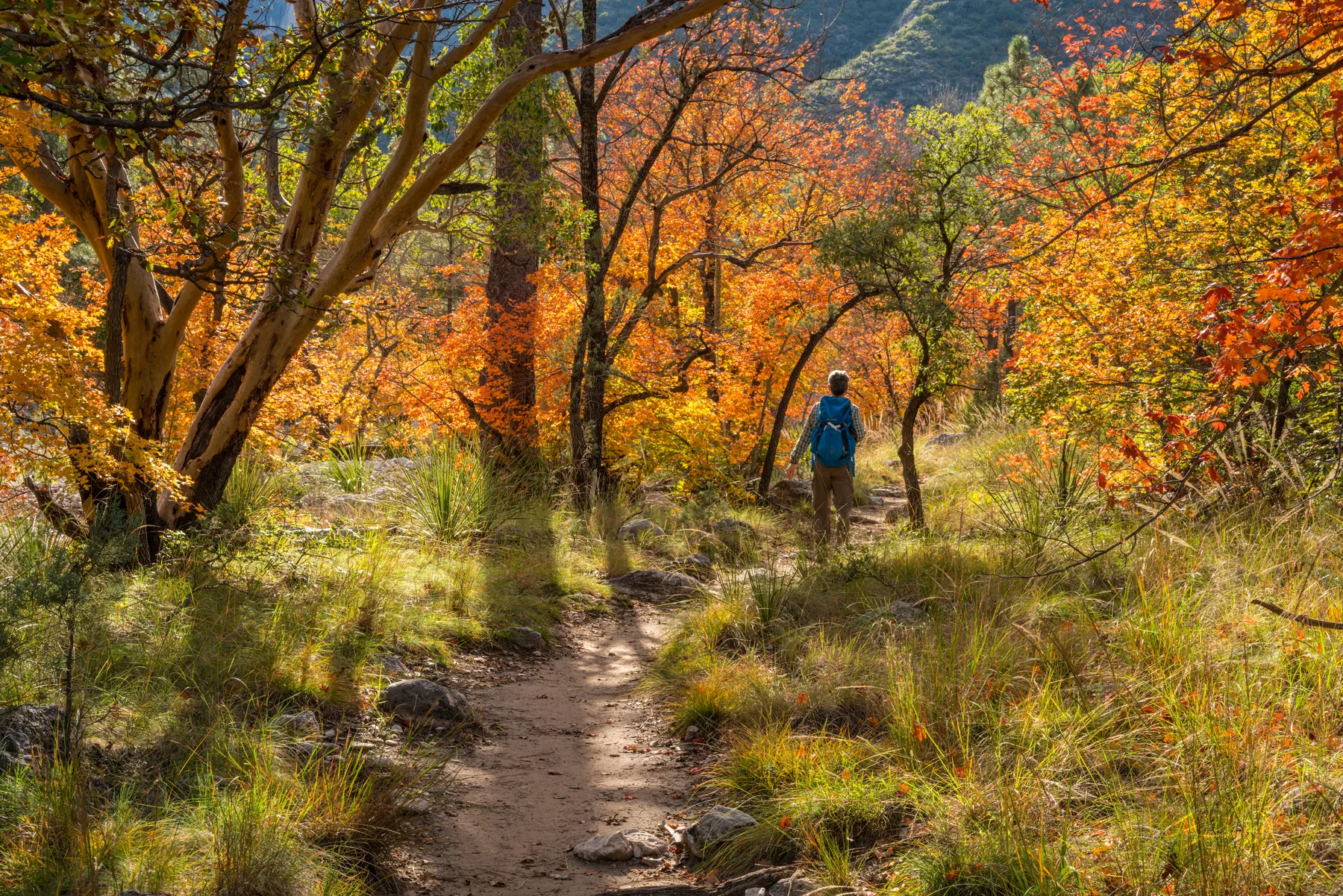
In the Guadalupe Mountains, elevation creates habitat for maples and other deciduous trees amid the surrounding desert. Fall color usually appears from mid-October to mid-November, but precipitation and weather can shift the display from year to year. The last week of October and first week of November are generally the best bet. NPS
Every significant color display requires hiking in and back out. Choose a destination by the kind of outing you want: a canyon trail with a range of turnaround points, a loop past water sources, or a strenuous route into the mountains. The park’s trail surfaces are loose rock or hardened rock, and widths vary from two to six feet. Hiking or trekking poles are highly recommended. NPS
McKittrick Canyon’s changing scale
McKittrick Canyon is a frequent focus in foliage season. Color can be viewed from the porch of Pratt Cabin, while stronger views call for continuing to the Notch or all the way to McKittrick Ridge. That gives day hikers a choice between a shorter look and a longer mountain outing. NPS
The canyon entrance is 7 miles north of Pine Springs on U.S. Highway 62/180. It is a day-use area with limited parking, and access closes at 5:00 p.m. Mountain Time. On fall-color weekends, the lot can fill, so a weekday visit offers a better chance of reaching the trailhead. NPS
Ranch loop or high-country effort
At Frijole Ranch, the Smith Spring Loop Trail combines desert and mountain views with several water sources where wildlife often gather. Its starting point is one mile north of Pine Springs on U.S. Highway 62/180, making it a distinct option for visitors who want a defined loop rather than a canyon out-and-back. NPS
From Pine Springs, the strenuous route to Devil’s Hall offers color a short distance from the area; Pine Springs can fill by early morning on foliage weekends. Day hikers can also head to the Bowl for occasional red maple leaves against green pines. The Guadalupe Peak Trail has little to no fall color. NPS
A separate season in Dog Canyon
Upper Dog Canyon, on the park’s north side, often begins changing color a week or two earlier than McKittrick Canyon and other east-side locations. It is reached via New Mexico State Road 137; allow two hours to travel from Pine Springs. The earlier shift makes it a useful alternative when the east side is not yet at its best. NPS
Fall weekends can bring capacity crowds across the park, while weekday visitation is generally lighter. Trailhead areas have accessible parking, but pets are not allowed on trails; only service animals trained for specific tasks are permitted. Match the destination to the day’s conditions and leave time for the return hike. NPS
Sources & further reading
Sources, dates, or details to query? Read our editorial approach.