A corridor between two waters
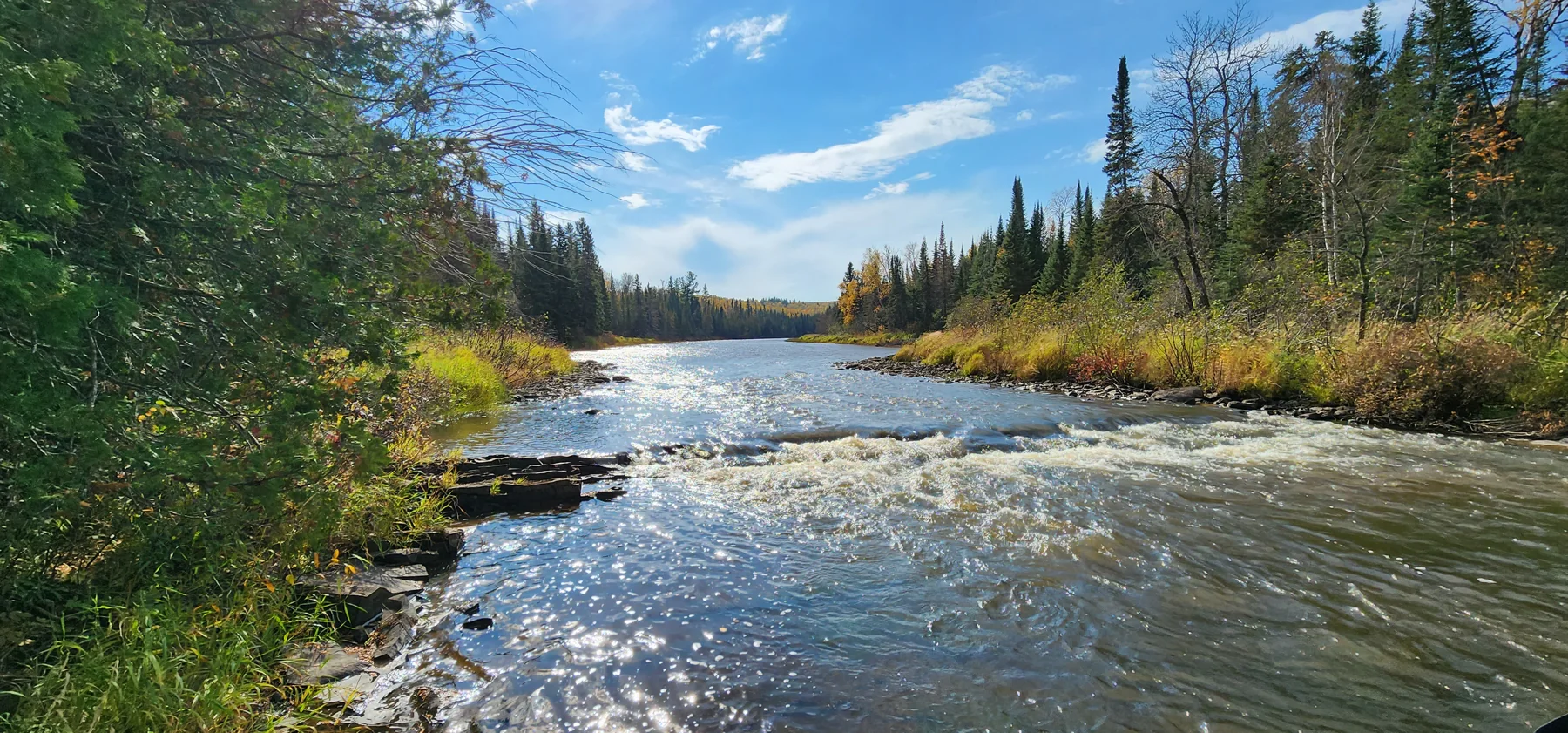
Gichi Onigaming, the Great Carrying Place, links Lake Superior at the reconstructed Depot with the Pigeon River at Fort Charlotte. The footpath follows a natural rift partly carved by glacial runoff. It served an extensive trade network before European contact; French fur traders later rendered its name as Grand Portage. NPS
The route’s two historic ends explain its workaday purpose. The North West Company built the Depot and Fort Charlotte to receive and ship goods, and voyageurs carried loads between them. A canoe trip can arrive at Fort Charlotte by the Pigeon River, then portage equipment toward Lake Superior. NPS
Choose a half, or take the full line
Old Highway 61 roughly divides the corridor. East of it, the trail threads gaps and valleys to avoid high rocky ridges; west of it, the route uses elevated ground to avoid steep slopes and swamps. Starting at the Depot and turning back at New Highway 61 makes a short outing, while Old Highway 61 offers a natural point to choose one half of the historic route. NPS
For the complete walk, the National Park Service lists the journey from the stockade on Lake Superior to Fort Charlotte and back as 17 miles round trip, taking eight to 16 hours. It also lists an 8 miles round trip option from the Depot to Old Highway 61 and a nine miles round trip hike from Old Highway 61 to Fort Charlotte. NPS
Read the ground and its traces
Expect a steep, narrow trail in places, with uneven rocky footing, standing water, stream crossings, and narrow boardwalks. Frost or dew can make wet boards slippery. This remote forest has no ambient light, so daylight travel is recommended where muddy patches and rough footing call for attention. Bicycles are prohibited. NPS
Along the corridor, archaeological work has identified resting places called poses in fur trade journals, as well as sites named the Fountain, the Parting Trees, and the Meadow. The Parting Trees marked a last glimpse of Lake Superior for voyageurs burdened with 180 pound loads. A silver trade ornament etched with a peacock-like design, uncovered during research in 2003, is displayed at the Heritage Center. NPS
Season and overnight choices
The trail is open year round, but the area receives a lot of snow. Snowshoes or skis are best for winter travel, and Fort Charlotte campsites are not maintained in winter. Two remote campsites are available to hikers and paddlers with a free backcountry permit; camping elsewhere on the trail is not allowed. A Fort Charlotte permit must be arranged online, with two weeks allowed for processing. NPS
Sources & further reading
Sources, dates, or details to query? Read our editorial approach.