A remote trailhead
Getting to the Petrified Forest is part of the outing. From I-94, take Exit 10 toward Camels Hump Lake, then follow the approved route posts: CR -11, 30th St SW, Wannagan Creek Rd at Durham Ranch, and 730 lead toward the trailhead. From Medora, the drive takes approximately 50 minutes on dirt and gravel roads. The trail begins at the lift gate behind the trailhead sign. NPS
The route crosses remote backcountry, so the drive and hike both call for preparation. The trail is unpaved and unmaintained, with steep slopes, uneven footing, loose stone, and potentially unstable ground. Proper footwear, sun protection, and weather-appropriate clothing matter on a trail with little to no shade. NPS
From badlands to prairie
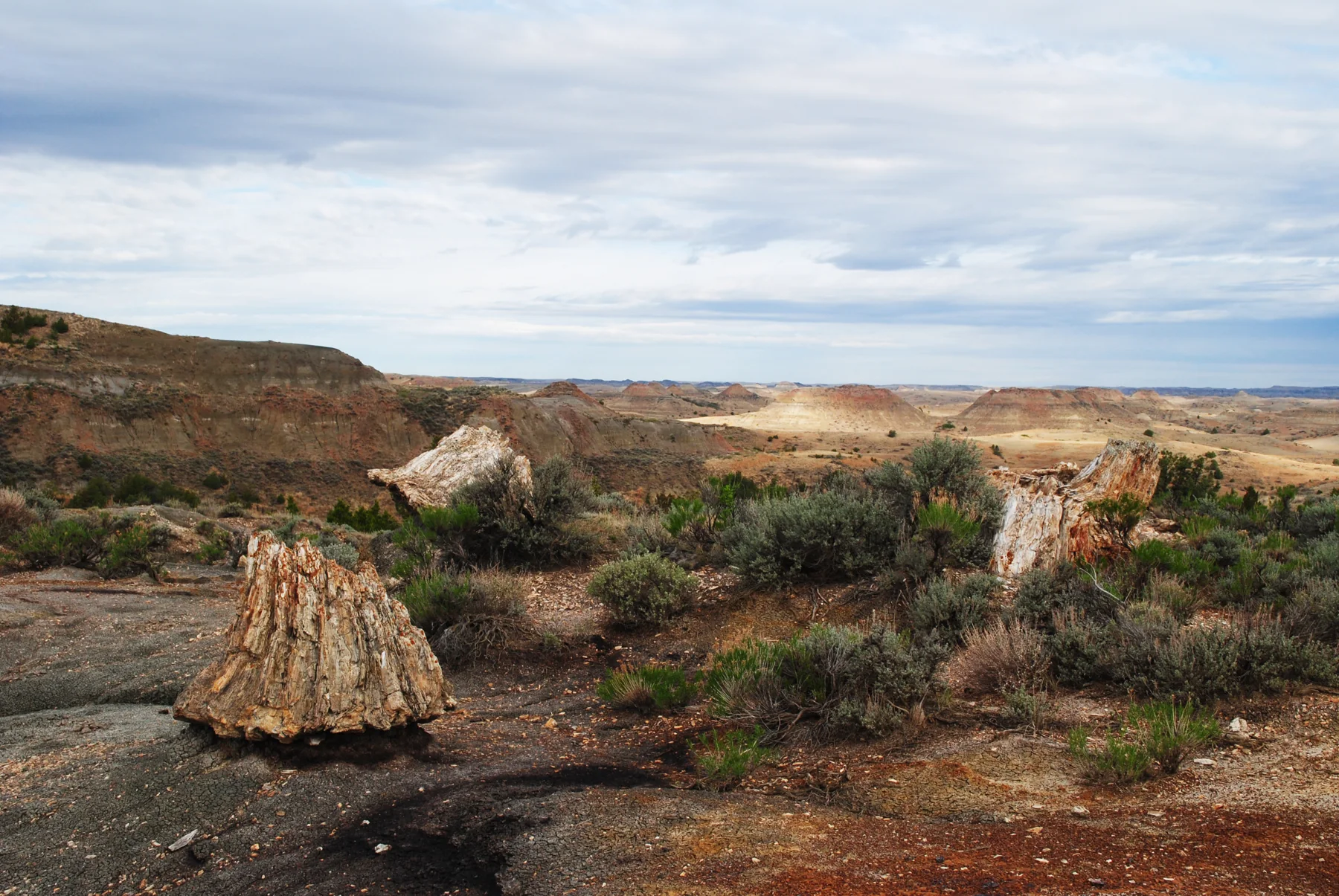
The trail climbs out of the badlands onto a wide prairie, where it splits. Each branch drops into a valley containing petrified stumps, approximately 1.5 miles from the parking area. The transition from broken badlands terrain to open grassland marks the route’s central change of scale. NPS
The petrified wood is part of a landscape once dominated by massive trees and shallow swamps, rather than today’s buttes and prairies. Theodore Roosevelt National Park has the third highest concentration of petrified wood in the United States. The stone remains in place: removing fossils, rocks, or other resources from the park is illegal. NPS
Choose the outing’s length
Hiking to either section of the petrified forest makes a 3-mile out-and-back. Those continuing beyond the wood can complete the 10.4 mile loop or connect with other park trails. The longer option changes the day’s demands: the park recommends additional water and supplies for the loop. NPS
For either route, carry at least one liter of water per person, per hour, especially in hot summer months. Ticks, flies, and other biting insects may be present in summer. Weather can make the ground slippery or unstable, so check current conditions with a ranger. NPS
Read the ground, respect the route
Because trail surfaces are not maintained, footing can change between uneven ground and loose stone. The route’s openness brings little shelter from sun or weather, and its remote backcountry character makes sound footwear and sufficient water essential. NPS
Service animals are allowed on leash no longer than 6 feet. Leave every fossil and other object where it lies, preserving both the geological record and the experience for those who follow. NPS
Sources & further reading
Sources, dates, or details to query? Read our editorial approach.