Choose a coast experience
Olympic National Park’s frontcountry beaches offer different ways to meet the coast: Kalaloch and Ruby Beach pair shore access with facilities, Rialto brings offshore seastacks and a rocky walk, and Second and Third Beaches add forest trails before the sand. Ozette links a lake-side start to two beach approaches. Conditions and access vary by destination, so choosing a beach also means choosing a surface and approach. NPS
At Kalaloch, US Highway 101 runs beside the area. Trails from the lodge and campground descend to sandy beach below a bluff, while the Kalaloch Creek Nature Trail makes an easy loop through coastal forest near the campground entrance. The Tree of Life stands balanced on the bluff and gives the shoreline a distinctive landmark. NPS
Kalaloch and Ruby Beach
Ruby Beach lies 7.5 miles north of Kalaloch, where Cedar Creek feeds into the Pacific. It has an accessible viewpoint, parking lot, and restrooms; the beach itself offers geology and tide pools, though driftwood can cover parts of it. Kalaloch’s campground is open year-round, and its ranger station operates in summer months. NPS
These are among the more accessible and pet-friendly beach choices: leashed pets are allowed on Kalaloch area beaches and Ruby Beach, with waste picked up and disposed of properly. Driftwood deserves caution around Kalaloch and Ruby, and the Pacific can turn a pleasant shore stop into a tide-dependent one. NPS
Rialto and the La Push road
To reach Rialto Beach from Highway 101, take State Route 110, also called La Push Road, then turn right on Mora Road. The Mora area along the way has a seasonally operated ranger station, nature trails, restrooms, and a campground. At the road’s end, a temporary ramp makes the 200-foot path to the beach accessible in summer months. NPS
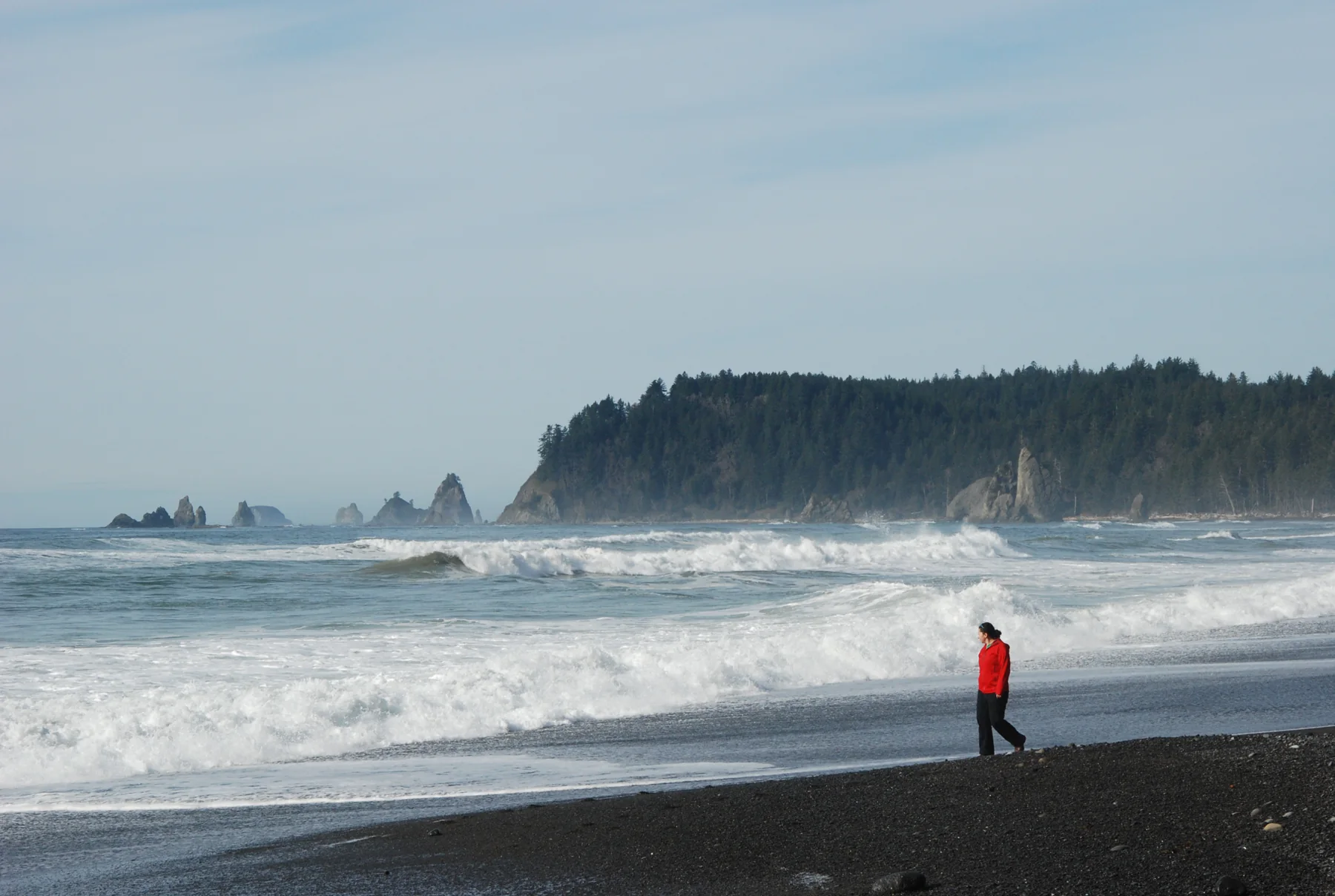
Rialto’s rocky shore is known for giant drift logs, pounding waves, and offshore islands called seastacks. A 1.5-mile walk north reaches Hole-in-the-Wall, an arching rock formation; check tide tables before setting out because some coastal points are passable only at lower tides. Pets are permitted from the parking lot to Ellen Creek, on leash. NPS
Forest trails and Ozette boardwalks
Along State Route 110, the Third Beach trail crosses forest for 1.4 miles before descending 270 feet to sand. The Second Beach trail begins on the Quileute Indian Reservation, then travels south along a .7-mile route into the park and descends 200 feet to a beach with seastacks and tidepools. Pets are not allowed on either beach trail or on the beaches themselves; visitors should respect the reservation and leave no trace. NPS
At Ozette, reached via Hoko-Ozette Road off Highway 112, the Cape Alava Trail is 3.1 miles and the Sandpoint Trail 2.8 miles; they connect through the Ozette Loop, which is 9 miles. Both routes are mostly boardwalk: Cape Alava passes prairie and forest to a rocky beach, while Sandpoint crosses coastal forest to a wide sandy beach. Boardwalks can be slippery in frosty or wet conditions, and pets are not allowed. NPS
Let tides and season guide the outing
Carry a tide chart and plan for lower tides where the route requires it. Strong winds and storms can elevate tides and create hazardous conditions; waves can move driftwood logs, and rip currents are dangerous. Olympic beaches are at their best in summer, while fall, winter, and spring can also be exciting; winter visitors should prepare for storms and unpredictable waves. NPS
Accessible restrooms are available at Rialto Beach picnic area, Kalaloch Lodge, Ruby Beach trailhead, and Ozette Ranger Station. The coast offers short viewpoint visits, forest walks, and longer boardwalk routes, but the tide and conditions remain part of each outing’s route choice. NPS
Sources & further reading
Sources, dates, or details to query? Read our editorial approach.