Begin with the campground edge
Pinnacles birding moves among chaparral, oak and pine woodland, riparian corridors, grassland, and scree, with the Pacific Flyway bringing migrants through. The east-side Park Store and Campground combine several edge habitats with year-round human-made water sources, making them a productive starting point. Look among the campground’s oak and pine trees and around the pool and fountain near the flagpole. NPS
A paved road past the Overflow parking lot leads toward Bacon Ranch and a riparian corridor. Early morning can bring California Quail in large coveys around group sites and the road; Wild Turkeys may also be present. Year-round birds include Northern Flicker, Acorn and Nuttall’s Woodpeckers, Oak Titmouse, California Towhee, California Thrasher, and Yellow-billed Magpie. Flycatchers, vireos, orioles, kingbirds, and warblers add a migratory layer. NPS
Bear Gulch’s water and rock
At Bear Gulch Nature Center, check the trees before crossing the road to Moses Spring Trail and Bear Gulch Reservoir. Wrens, Bushtits, and Spotted Towhees are possible along the way; kestrels and other raptors may work the reservoir while swifts and swallows use the surrounding rock formations. A climber’s trail around the reservoir’s south end offers views toward reeds and willow trees. NPS
Sycamore Trail downstream of the Nature Center is noted for bird diversity, especially during spring migration and breeding. The route’s shift from center grounds to trail, reservoir, and riparian vegetation changes what to scan: tree canopy, open water, cliffs, and reeds each support different observations. NPS
Cliffs and condor country
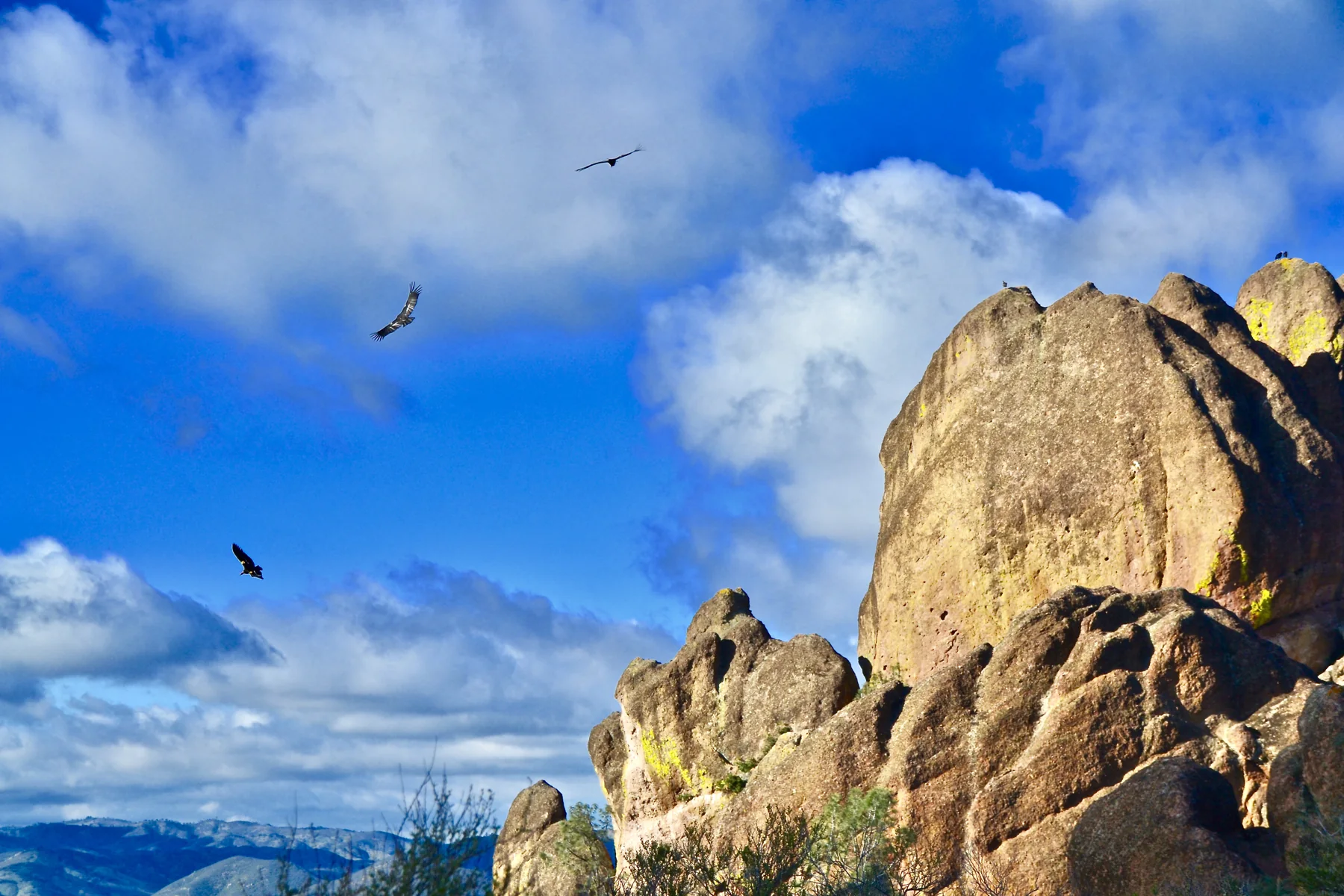
On the west side, Balconies Trail begins at Chaparral trailhead and parking lot, with views of Machete Ridge and Balconies Cliffs. Canyon Wrens, towhees, swallows, and Oak Titmice are among the possibilities; the Balconies Cliff trail above the talus cave system can also bring views of swifts, falcons, eagles, and California Condors. The gate is open from 7:30am to 8pm. NPS
The High Peaks’ towers, spires, and monoliths form a vantage point for scanning the sky. Early morning may find condors roosting in rock formations or gray pines before they rise on thermals and updrafts. Turkey Vultures are frequent and can resemble distant condors, so binoculars in the 7 - 10 power range or a spotting scope can help. Scopes are available in the campground before the RV loop and at Peaks View Parking Area. NPS
Plan around heat and exposure
Birding can be productive year-round, particularly for resident species, but the best viewing is around dawn and dusk. High Peaks and Chalone Peak trails may be 10 degrees hotter than parking areas in summer, and summer temperatures commonly exceed 100°F. Most trails are exposed; water is available only in developed areas, not along trails. Bring a map, water, and season-appropriate clothing, and avoid strenuous summer hiking during the hottest parts of the day. NPS
Rocky, uneven or slippery surfaces, rattlesnakes, and poison oak call for care on the trails. Keep to established routes and observe birds at a distance. The park notes that wildlife viewing is best without pets; binoculars and patient observation are useful across all four birding areas. NPS
Sources & further reading
Sources, dates, or details to query? Read our editorial approach.