Where the established climbing gathers
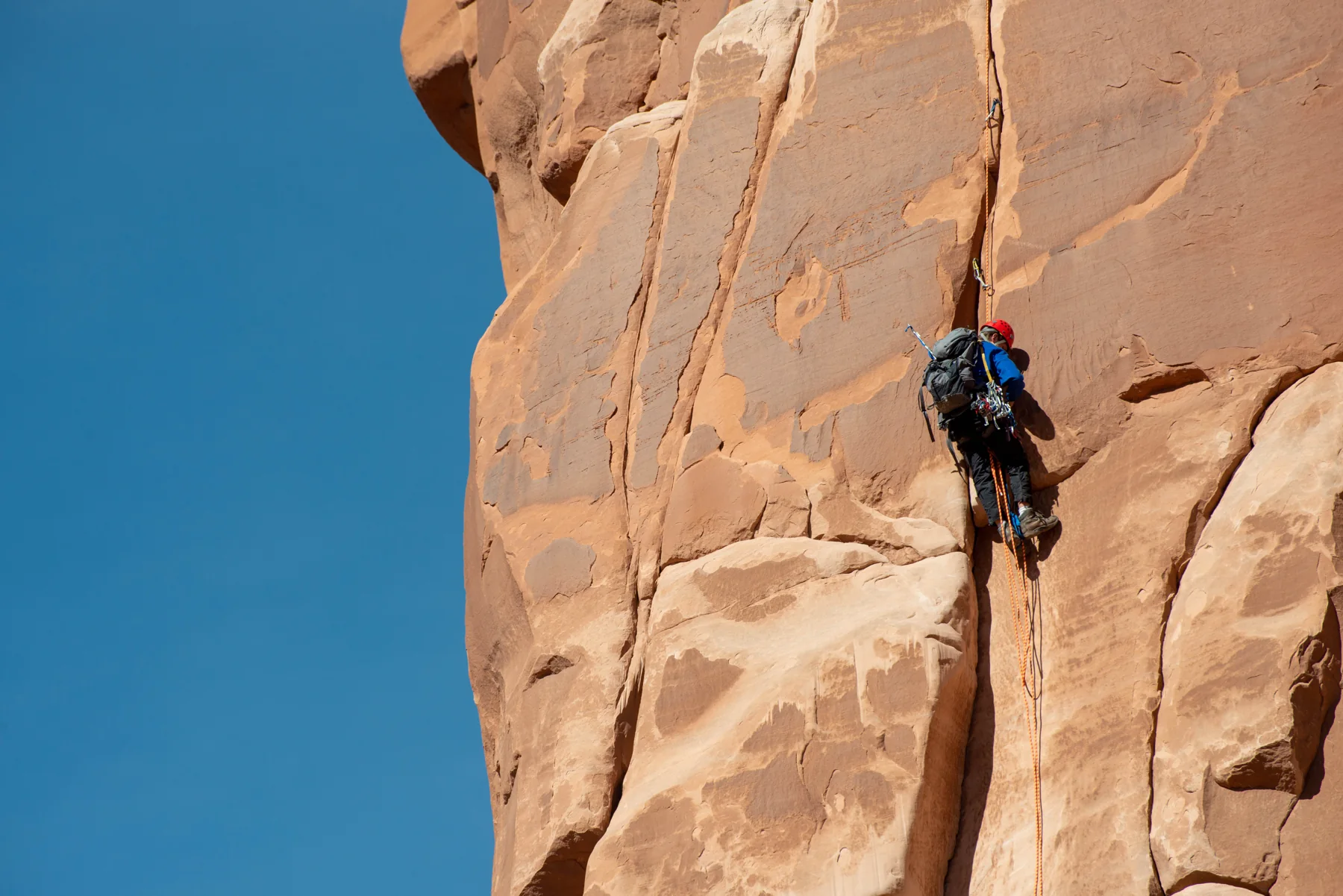
The sandstone towers of Island in the Sky attract the most rock climbers in Canyonlands. Elsewhere in the park, poor rock quality and a lack of established routes mean climbers are less often seen. Most climbing here is technical and requires advanced skills, so choosing a route begins with knowing its demands and checking whether it is open. NPS
The landscape changes the approach as well as the climb. Routes on sandstone directly beside White Rim Road can be reached by four-wheel-drive vehicle, with a permit required for that road. Towers in Monument Basin call for hiking across uneven, rocky surfaces and scree slopes. NPS
Access and closures define the map
A technical climbing permit is not required, but overnight backcountry travel and day-use trips on White Rim Road and backcountry roads in The Needles do require permits. No camping is allowed at the trailhead to Zeus and Moses. The distinction matters when planning a route whose approach crosses regulated roads or involves an overnight stay. NPS
Permanent closures cover the entire Salt Creek Archeological District in The Needles, all of Horseshoe Canyon, and climbing into any archaeological site or cultural resource. Climbing is also prohibited on arches or natural bridges named on a USGS map, except Washer Woman Arch at Island in the Sky. Temporary closures protect nesting raptors and lambing desert bighorn sheep, so check current route status before selecting a climb. NPS
Keep the sandstone intact
Climbing should be mostly free climbing or clean aid climbing. White chalk is prohibited; chalk must resemble the rock color. Chiseling, gluing holds, and intentionally removing lichen or plants are prohibited, as is motorized drilling. New fixed gear requires a permit, while bolts, hangers, and chains must be colored to match the rock. NPS
Approach routes on rock, in sandy washes, or along designated trails; some approaches have labeled brown carsonite posts. Avoid creating social trails, since shortcuts damage vegetation and desert soils. During peak visitation, spring through fall, the park recommends using established pullouts and parking lots. NPS
Prepare for a remote climb
Weather can transform the rock quickly: thunderstorms may bring lightning, hail, rain, slippery surfaces, and hypothermia, while summer days can reach 100°F. Inspect fixed gear because the park does not maintain anchors. Cell service is extremely limited, so climbers should be prepared to self-rescue and have a plan for getting help. NPS
Route choice carries responsibility for the descent and for the approach. A helmet is advised, and hazards include falling rocks, snakes, spiny plants, poison ivy, and biting insects. Guided climbing services are prohibited. These conditions favor careful route research, equipment checks, and respect for closures before setting out. NPS
Sources & further reading
Sources, dates, or details to query? Read our editorial approach.