Circle the pueblo
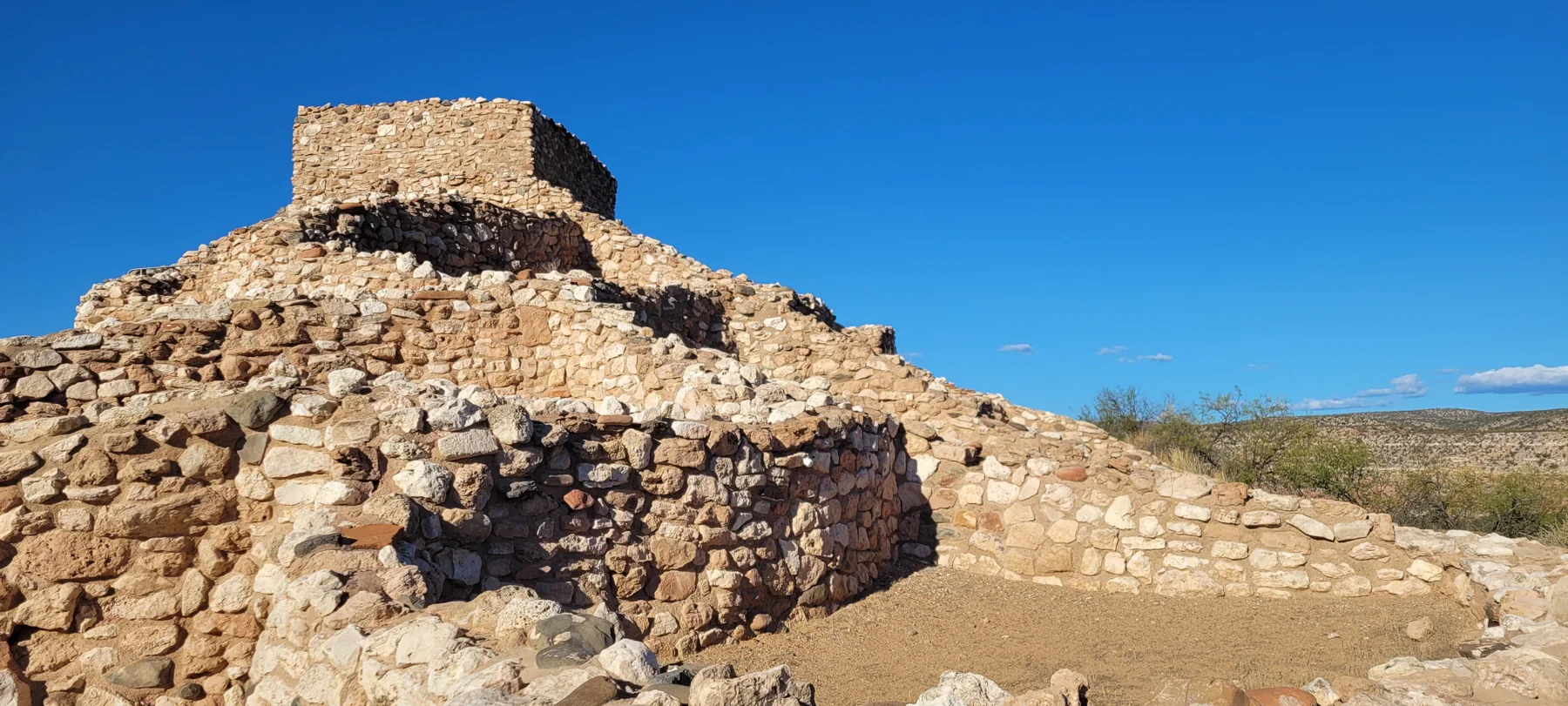
The Pueblo Trail makes a 0.3 mile loop around the dwelling, bringing visitors close to the structure built by the Sinagua, the people who lived here in the Verde Valley. The route is entirely paved and generally easy, though steeper grades may challenge visitors with balance, mobility, or knee issues and are not suitable for wheelchairs. Benches line the trail, but most of it remains in the sun throughout the day. NPS
The pueblo was constructed and expanded in four phases from approximately 1050 CE to 1380. At the end of construction, it held about 110 rooms, including 23 on the second story; about 225 people could have lived there at its peak. The scale makes the loop a way to read a settlement as a community rather than as a single dwelling. NPS
Step into a room and climb the citadel
Visitors can walk into and stand on the roof of one pueblo room. The tower, or citadel, offers a view into the inner structure of a room and some relief from the intense sun. Stairs lead to the citadel roof, which provides 360-degree views of Tuzigoot. NPS
The roof is a more demanding choice than the loop: it is reached by two sets of stairs, with dim lighting and steep, potentially slippery steps. Access may be difficult for visitors with vision issues. Staying on the loop keeps the outing on paved ground; entering the citadel adds an interior view and an elevated perspective. NPS
Read the site as living heritage
Most of Tuzigoot was reconstructed between 1933 and 1935 on the pueblo’s original foundation. Park staff continue to maintain it with natural materials and techniques similar to those the Sinagua would have used. The reconstruction is therefore part of the visible site’s history, while the foundation and community story connect it to the earlier settlement. NPS
The Sinagua left the Verde Valley by about the early 1400s. The reasons are not known; possible factors include hotter, drier conditions, competition for resources, trade-route changes, or disease. Descendant traditional knowledge also holds that these pueblos were never meant to be permanent settlements. Tuzigoot remains a place where people connect with culture and heritage. NPS
Choose timing and carry water
The trail has no shade, and summer high temperatures range from 95 ° to 115 ° F. Bring water; the park does not sell bottled water, though a refill station and drinking fountain are available at the restrooms. From spring through fall, rattlesnakes may be present, and afternoon monsoon storms are common from July through mid-September. Park trails close for 30 minutes after nearby lightning strikes within five miles. NPS
The pueblo and trails are accessible only during operating hours. Pets are welcome on leash no more than six feet long; visitors should stay on the trail and avoid touching or climbing the dwellings. NPS
Sources & further reading
Sources, dates, or details to query? Read our editorial approach.