Look to the grassy edges
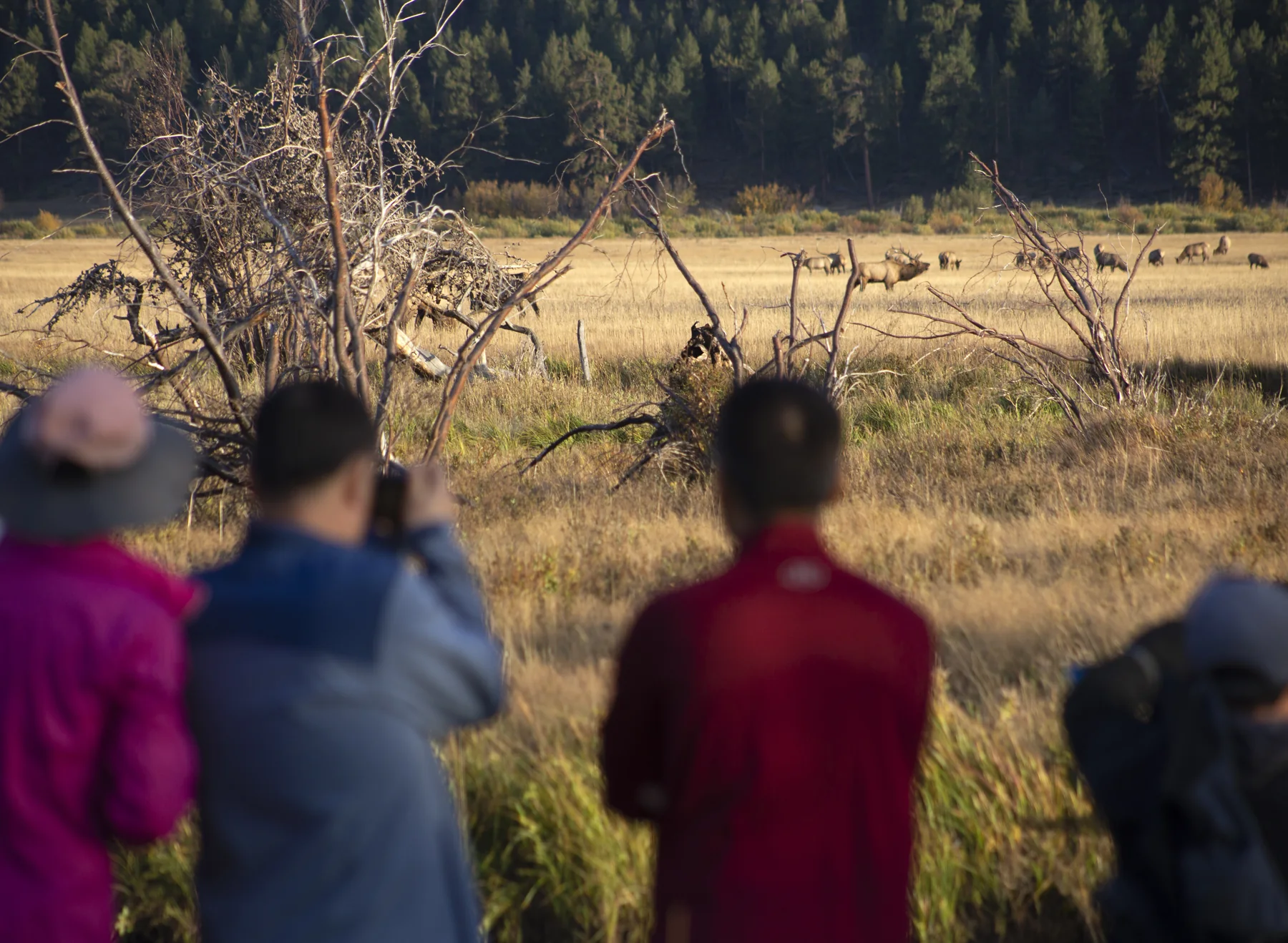
Roosevelt elk are among the most readily observed wildlife in Redwood National and State Parks. Herds often feed in open grassy areas, especially where meadows meet forest: the edge habitat offers food and quick cover from predators or poor weather. Elk range throughout the parks, but visitors most often look near Orick, Elk Meadow, Elk Prairie and Prairie Creek Visitor Center, or south of Crescent City. NPS
The setting matters as much as the animal. Elk move seasonally from higher elevations in summer toward valleys in winter in search of food and shelter. Males carry large antlers from late summer through winter; females are smaller and lack antlers. Calves are born in open grassy areas in May and June. Cows and young live in loose herds, while bulls are often solitary or in bachelor groups outside the fall mating season. NPS
Orick and Elk Meadow
Near the parks’ southern end, elk are often spotted around Orick. Elk Meadow is a popular viewing area close to trails and a picnic area. The approach is via Davison Road, turning left three miles north of Orick. Several roadside pull-outs provide parking and information exhibits; continue along the road for less than a mile to reach the picnic area, restroom, and trails. NPS
Much of the land around Orick is private, so keep park boundaries in view as well as highway traffic. That makes the pull-outs a practical choice for roadside observation: visitors can watch from a designated stopping place without drifting onto private land or lingering in the roadway. NPS
Elk Prairie and the northern option
For a viewing stop with visitor services, head to Prairie Creek Visitor Center. From Orick, take exit 753 from Highway 101 for Newton B. Drury Parkway, then use pull-outs along Elk Prairie or parking near the center. The visitor center adds ranger-led tours, exhibits, a park store, restrooms, and a picnic area to the chance of seeing elk. NPS
Elk are less common in the northern park area, though they are sometimes seen south of Crescent City near Enderts Beach Road. This area is generally outside park boundaries, so private-property lines and highway traffic matter there too. The pull-outs and parking areas at the identified viewing points are paved and level; the pull-outs do not have designated accessible parking. A seated viewing area, tactile aids, and ranger talks are available at Prairie Creek Visitor Center and picnic area. NPS
Watch with distance
Binoculars or a camera’s zoom let visitors observe without approaching. Elk are dangerous and unpredictable, and can be aggressive, especially during the fall rut. Keep at least 25 yards away, whether watching from a roadside or encountering an animal on a trail. Elk communicate with bugling, a sound combining a roar and whistle, but the best viewing choice remains patient observation from a safe place. NPS
Pets are permitted in parking and picnic areas on a leash no longer than 6 ft. Use the pull-outs and established parking rather than approaching animals or crossing into private property. At Prairie Creek, ranger talks and tactile aids offer another way to learn about elk if the animals are distant or not visible during a visit. NPS
Sources & further reading
Sources, dates, or details to query? Read our editorial approach.