Enter the railroad landscape
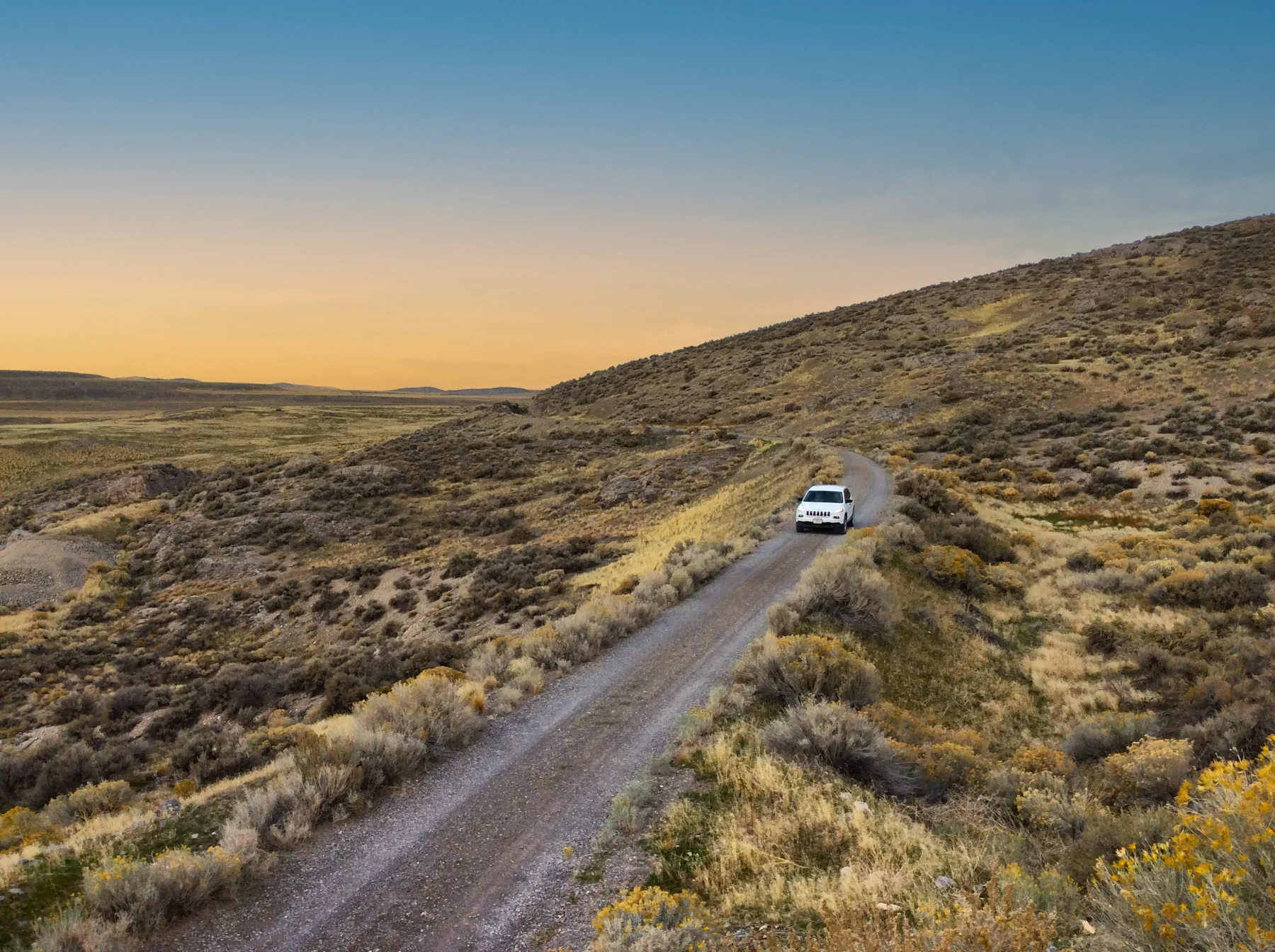
The West Auto Tour follows the original Transcontinental Railroad grade through Golden Spike National Historical Park in Utah. The route is approximately seven miles, with a glimpse of the Great Salt Lake, broad open country, and the “10 Miles in a Day” sign along the way. Its historic roadbed lets visitors trace the landscape passengers would have crossed in Utah Territory. NPS
Reach the start west of the Visitor Center via Golden Spike Drive and follow the posted West Auto Tour signs. The tour is one-way, narrow, and often elevated; drive slowly and pull off only at wider sections so other vehicles can pass. It is intended for passenger motor vehicles, not RVs or vehicles pulling trailers. NPS
Two grades tell a story
Early stops make the railroad contest visible in the ground itself. At Parallel Grading, a second grade and parallel cuts show how Union Pacific and Central Pacific crews built roadbeds near one another while racing toward Promontory. Congress established Promontory Summit as the meeting place on April 10, 1869, ending the duplication. At Cut and Fill, excavated rock had been reused to raise low ground; the fill was abandoned when Union Pacific workers learned Promontory would be the meeting point. NPS
Stair-Step Cuts shows how crews attacked rock from opposite sides and different levels. The winding grade and the Union Pacific grade nearby make the scale of hand construction easier to read. A rock culvert laid without mortar in 1869 is another surviving detail to watch for in the grade. NPS
Work written into the roadbed
At Sidings, the widened grade marks where trains traveling in opposite directions could pass. Lower-priority freight trains waited while passenger or mail trains continued; sidings were built about every three to five miles along the route. The landscape records not only construction, but the operating choices that made the railroad function. NPS
The “Ten Miles in One Day” marker recalls the Central Pacific’s April 28, 1869 record: ten miles and fifty-six feet of track laid in a day. Nearby, gravel for ballast came from a larger excavation, showing how loose rock held ties in place and helped drainage. As the tour approaches Promontory Summit, it leaves the railroad grade and returns to the main road; stop 10 is just beyond the Visitor Center. NPS
Plan for the seasonal window
The West Tour is closed seasonally from late November to early June, and the availability of auto tours can change without notice. The source lists spring and summer as seasons for the tour. A full tour takes about an hour and a half; the narrow elevated grade rewards an attentive driver and a passenger who can focus on the parallel cuts, fills, and old railroad features. NPS
Drivers must be of legal driving age, while passengers of all ages are encouraged. The visitor may continue to the East Tour by following signs three miles from the Visitor Center to its start. That extension is a separate tour: the West route itself ends by returning to the main road near the center. NPS
Sources & further reading
Sources, dates, or details to query? Read our editorial approach.