A park with two winter sides
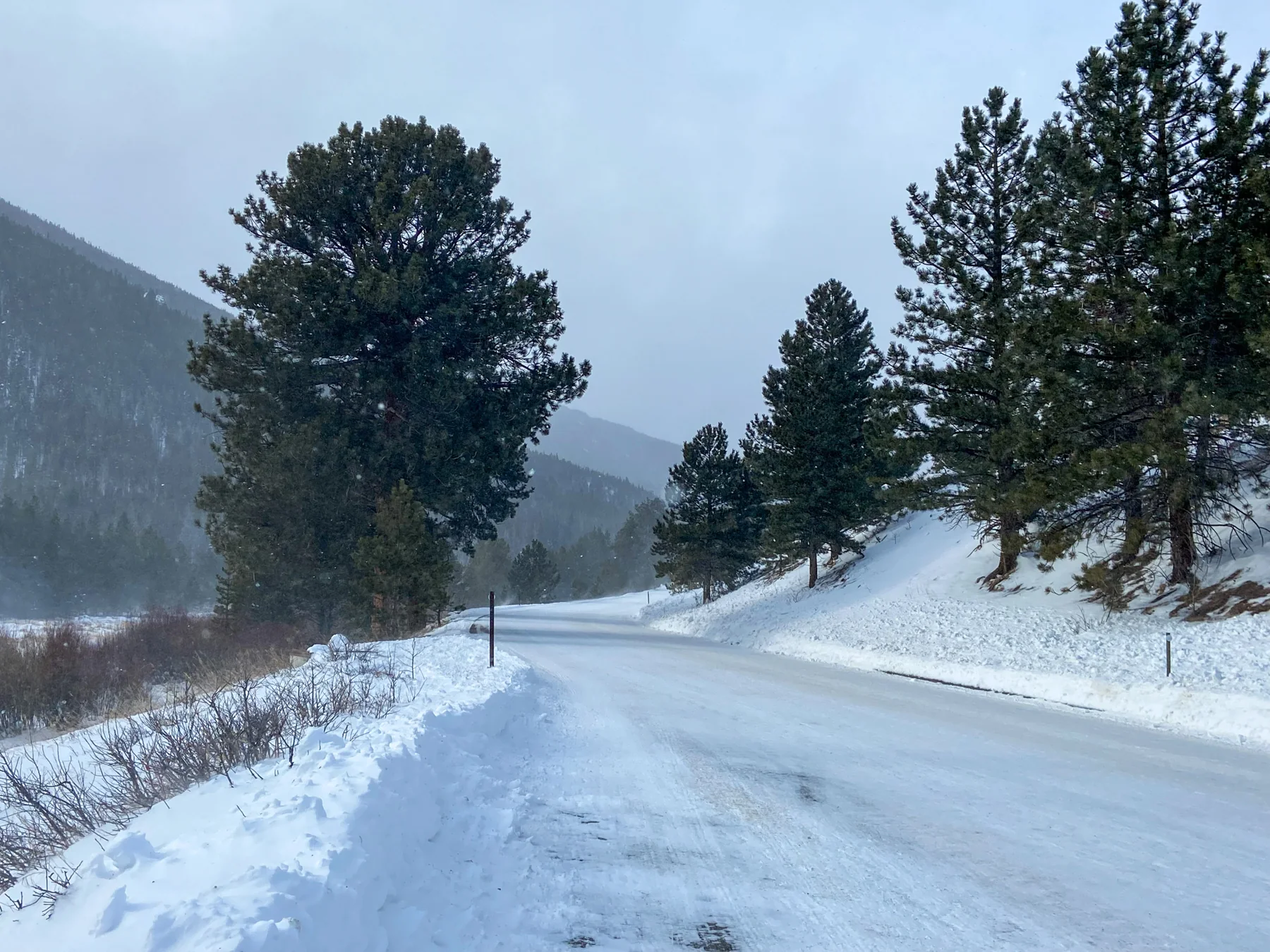
Rocky Mountain National Park remains open year-round on both its east and west sides, but winter driving is governed by conditions rather than a dependable cross-park route. Visitors driving between mid-October and early June should expect possible snowpacked or icy roads, wildlife crossing, and temporary closures. Road status can change quickly with blowing snow and incoming storms, and closures may be imposed at any time. NPS
Trail Ridge Road is the clearest example of the seasonal divide. During winter, motorists cannot drive over its high-alpine summit, and the road is closed to through travel. Closure points can fluctuate, so check current park road status before departure. A drive from Grand Lake to Estes Park should not assume the road will connect the two sides. NPS
Elevation changes the conditions
Conditions at 5,000 feet can differ dramatically from those above 8,000 feet. Trail Ridge Road is not designed as an all-season road: 11 miles lie above 11,500 feet, with few guard rails and no shoulders. Above 10,000 feet, winter can bring drifting snow, high winds, and below-freezing temperatures. The route normally opens the last week in May, weather permitting. NPS
That elevation shift makes a park drive a sequence of decisions, not simply a matter of choosing a destination. Slow down on snowpacked or icy roads, leave distance from other vehicles, and watch for wildlife. The park’s roads are open to personal vehicles, but weather, temporary closures, and the road’s design can limit where a vehicle can safely go. NPS
Traction law and preparation
Colorado’s Vehicle Traction Law may become active in the park when weather and road conditions require it. When active, every vehicle—including four-wheel drive, all-wheel drive, and two-wheel drive—must have properly rated Mud and Snow, Mountain and Snow, or All-Weather tires with at least 3/16" tread. If tires are not properly rated, an approved device such as chains, cables, tire or snow socks, or studded tires is required. NPS
The law applies even to a vehicle with four-wheel or all-wheel drive. If a crash occurs while the law is active, including sliding off the road on ice, motorists without compliant equipment may be cited. Preparing for traction requirements is therefore part of deciding whether a winter drive is appropriate, especially when conditions can change between lower and higher elevations. NPS
Check the road before setting out
Road status can change quickly. Check variable message boards in the park and call the recorded Trail Ridge Road status line at (970) 586-1222 for road information. The NPS route page also lists the Information Office at 970-586-1206; confirm current contact hours before counting on a staffed response. NPS
A useful winter plan leaves room to turn back or remain on one side of the park if conditions change. Trail Ridge Road’s limited shoulders and guard rails, high exposure, and seasonal closure make current status essential to route choice; the park’s year-round opening does not mean every road connects across the high country in winter. NPS
Sources & further reading
Sources, dates, or details to query? Read our editorial approach.