A solar system that will not hold still
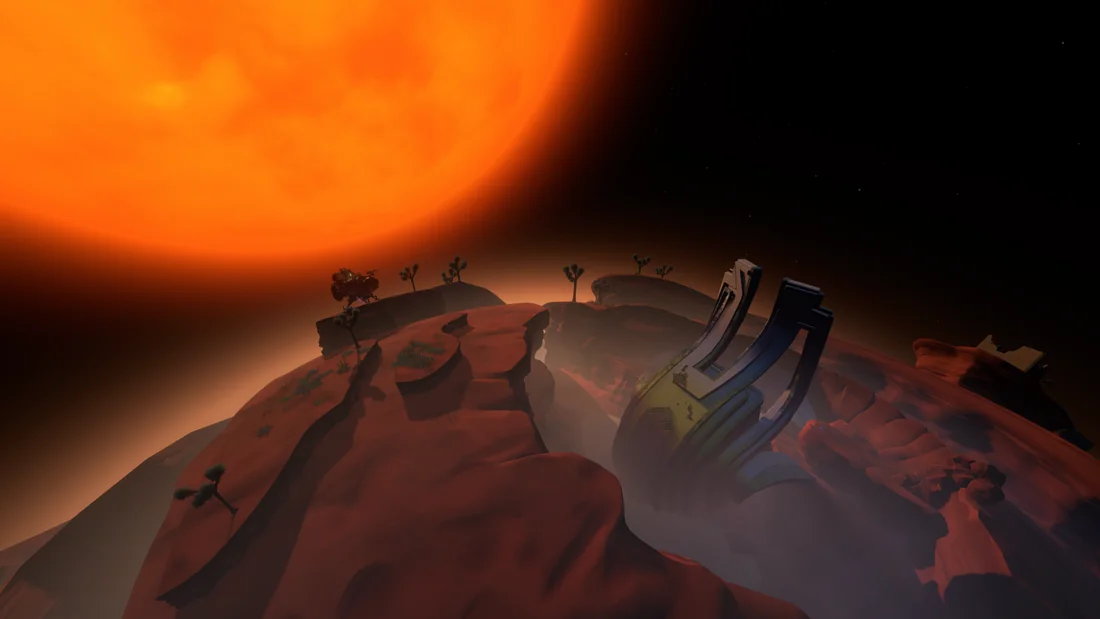
Outer Wilds Ventures explores a handcrafted solar system caught in a time loop. Mobius Digital’s producer Kelsey Rice describes a twenty-two-minute cycle in which the bodies keep moving and environments change independently of the player. Oxygen and fuel are limited, while knowledge carries between loops. These are the public premises of the exploration, not explanations of its mystery. Developer source Developer source
Two named examples show what a changing map means. Brittle Hollow loses pieces of its crust, and the Hourglass Twins transfer sand between planets. A location can therefore be different when reached at another point in the cycle. The question is not only where to go, but what is happening there at the time of arrival. Developer source
Little Scout: send a probe before yourself
The Little Scout illuminates dark caves, takes photographs and tests environmental hazards. It puts a small instrument into a place before the explorer enters. A photograph and a probe’s encounter with the surroundings can supply information that a view from the ship does not. Developer source
The ship and jetpack handle travel; the scout has a more investigative role. Distinguishing those functions makes the equipment easier to understand without prescribing a route or revealing what a particular test will uncover. Developer source Developer source
Sound and writing ask for different tools
The Signalscope follows mysterious audio, while the Translator reads ancient Nomai writing. They provide two more ways to investigate the same solar system: locate a signal and interpret a trace left by someone else. Neither is simply a stronger version of the scout. Each makes a different kind of evidence available. Developer source
That division explains why arriving at a planet is only the beginning of an expedition. A visible feature, a sound and a piece of writing can lead to different questions. The developer’s description supplies the tools but deliberately leaves the answers for exploration.
Understanding is the progression
Rice describes progress as limited by what the player understands, with knowledge surviving between loops and no quest markers leading every step. Returning to a place can matter because the explorer now knows what to look for or when to arrive. This introduction stops at the instruments and the publicly described planetary changes; it leaves the loop’s cause, solutions and eventual destination unexplained. Developer source
Sources & further reading
Sources, dates, or details to query? Read our editorial approach.