A ship returns without its crew
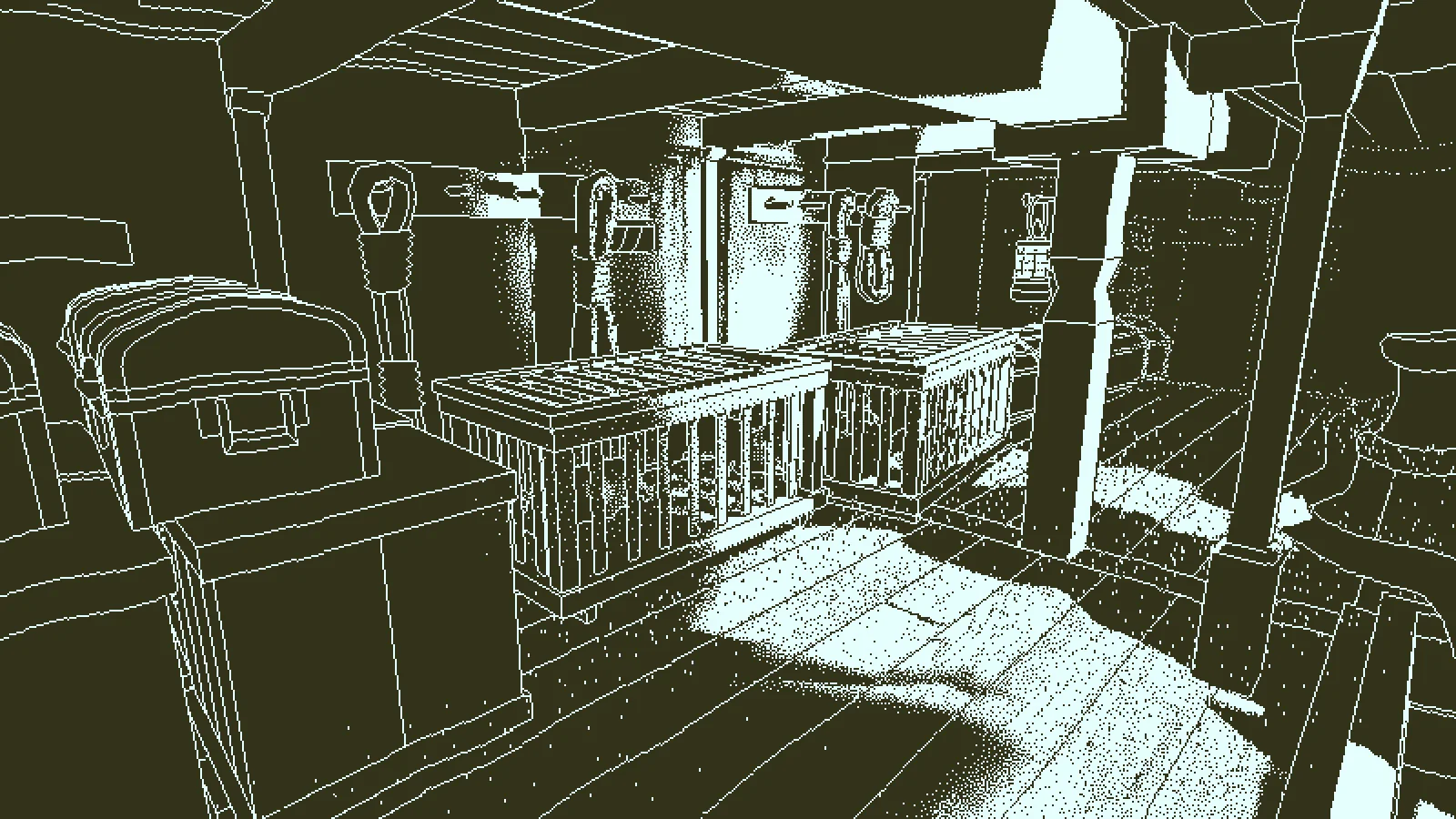
The fictional merchant ship Obra Dinn left London for the Orient in 1802 carrying more than 200 tons of trade goods. After missing a Cape of Good Hope rendezvous and being declared lost, it returns to Falmouth on October 14, 1807, with damaged sails and no visible crew. This is the setup for a first-person mystery, not a real maritime event. Official Steam description
The player takes the role of an East India Company insurance investigator assigned to assess the damage. That job gives the shipboard exploration a clear purpose: examine what remains and make a logical account of the losses. The mystery unfolds through observation and deduction rather than a conventional trail of action scenes. Official Steam description
The watch opens moments in time
A watch associated with bodies exposes flashbacks at the moment of death. These scenes are fragments of the ship’s history, encountered as the investigation proceeds. The player’s task is to connect what each fragment reveals with other evidence, while the larger sequence remains something to reconstruct. Lucas Pope: reconstruction mechanics
As scenes are discovered, information fills the investigation book and helps place events in chronology. The book records details of deaths and identity clues, letting the player revisit observations and compare them across separate moments. The ship becomes a space read through evidence accumulated over time. Lucas Pope: the investigation book Lucas Pope: reconstruction mechanics
A record built for comparison
The book’s story-like form gathers the investigation into one place. Maps, sketches, and charts can unfold from it, while its pages organize chronology, recorded details, and clues. Developer Lucas Pope chose this format over a shorter logbook or a separate timeline interface, making the act of consulting the record part of the investigative frame. Lucas Pope: the investigation book
That structure suits a mystery where certainty may arrive unevenly. The player enters fates as short statements, and the game validates several correct answers together rather than confirming each one immediately. A conclusion can therefore be considered against a cluster of evidence, rather than treated as settled after every isolated guess. Lucas Pope: reconstruction mechanics
An insurance tally, not a route map
The final insurance tally summarizes the investigation, tying the assignment back to its practical frame: assessing damages to the vessel and its crew. The book makes the ship’s chronology, visual records, and deductions legible as parts of one task, giving exploration a strong archival quality. Lucas Pope: the investigation book
The experience’s distinctive movement is intellectual as much as spatial. The player examines the ship, opens flashbacks tied to bodies, and returns to a growing record to compare details. Its pleasure lies in building a coherent account from scattered observations, with uncertainty preserved until enough evidence supports a judgment. Official Steam description Lucas Pope: reconstruction mechanics
Sources & further reading
Sources, dates, or details to query? Read our editorial approach.